All-on-4 dental implants in Alanya, Turkey
All-on-4 gives you a full set of fixed teeth in one jaw, held by 4 implants. It is for people who have lost all their teeth, or are likely to lose them. At Alanya Dental Place in Alanya, we plan All-on-4 treatment digitally. If you are suitable, you can leave the clinic on the same day with fixed temporary teeth.
Send us your X-ray on WhatsApp
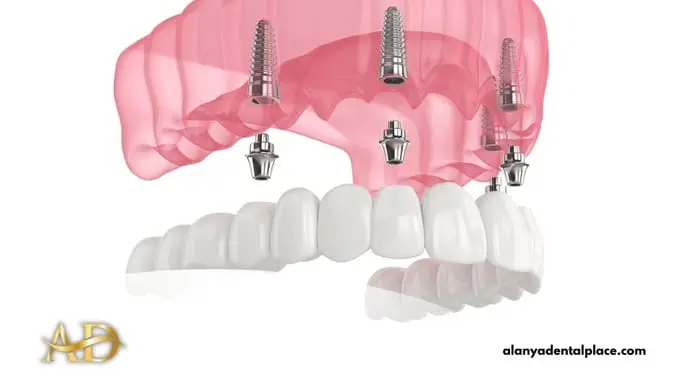
What are All-on-4 dental implants?
All-on-4 replaces all the teeth in one jaw with a bridge fixed to just 4 implants. It is for people who have no teeth left or have lost many teeth. It can also replace decayed or broken teeth that cannot be saved. It is a well-established technique, used around the world.
Many of our patients have worn removable dentures for years, or have lost teeth one by one until few are left. All-on-4 gives them fixed teeth on implants. The teeth do not come out, and chewing can feel much closer to natural teeth.
Where All-on-4 comes from
Dr Paulo Maló, a Portuguese dentist, developed the technique in the late 1990s. It was tested in clinical studies with Nobel Biocare and then spread around the world. Studies that followed patients for more than 10 years show that careful patient selection and surgical planning are key to good results. Most large implant makers, such as Nobel Biocare, Straumann and Osstem, have their own All-on-4 protocols.
How All-on-4 differs from other implant treatments
With conventional implants, each missing tooth gets its own implant. A jaw with no teeth usually needs 8 to 10 implants, and often a bone graft because there is not enough bone.
All-on-4 uses the densest bone, at the front of the jaw. The 2 back implants are tilted at 30 to 45 degrees. This way, most people do not need a bone graft, and only 4 implants are needed. Surgery is shorter and costs less. For most patients, fixed temporary teeth are also possible on the same day.
Is your bone suitable for All-on-4? We can check your X-rays.
Who is All-on-4 for?
All-on-4 often does not need a bone graft. This means it can be an option even if you have lost some jawbone. It is not right for everyone, so the dentist decides after an examination and scans.
Who needs a more careful assessment?
Healing can be harder if you smoke heavily or have severe osteoporosis. The same applies if your diabetes is not well controlled, or you have treatment that weakens your immune system. Treatment may still be possible, with closer monitoring and a plan made for you. All-on-4 is not usually recommended under the age of 18, because the jaw is still growing. If you grind your teeth badly (bruxism), your plan includes a night guard.
The dentist makes the final decision after seeing your panoramic X-ray or 3D scan (CBCT) and examining you at our clinic. So the first step is always an initial assessment.
How is All-on-4 done? Why some implants are tilted
How can only 4 implants hold a full set of teeth? The answer is the angle at which they are placed.
Why are only 4 implants needed?
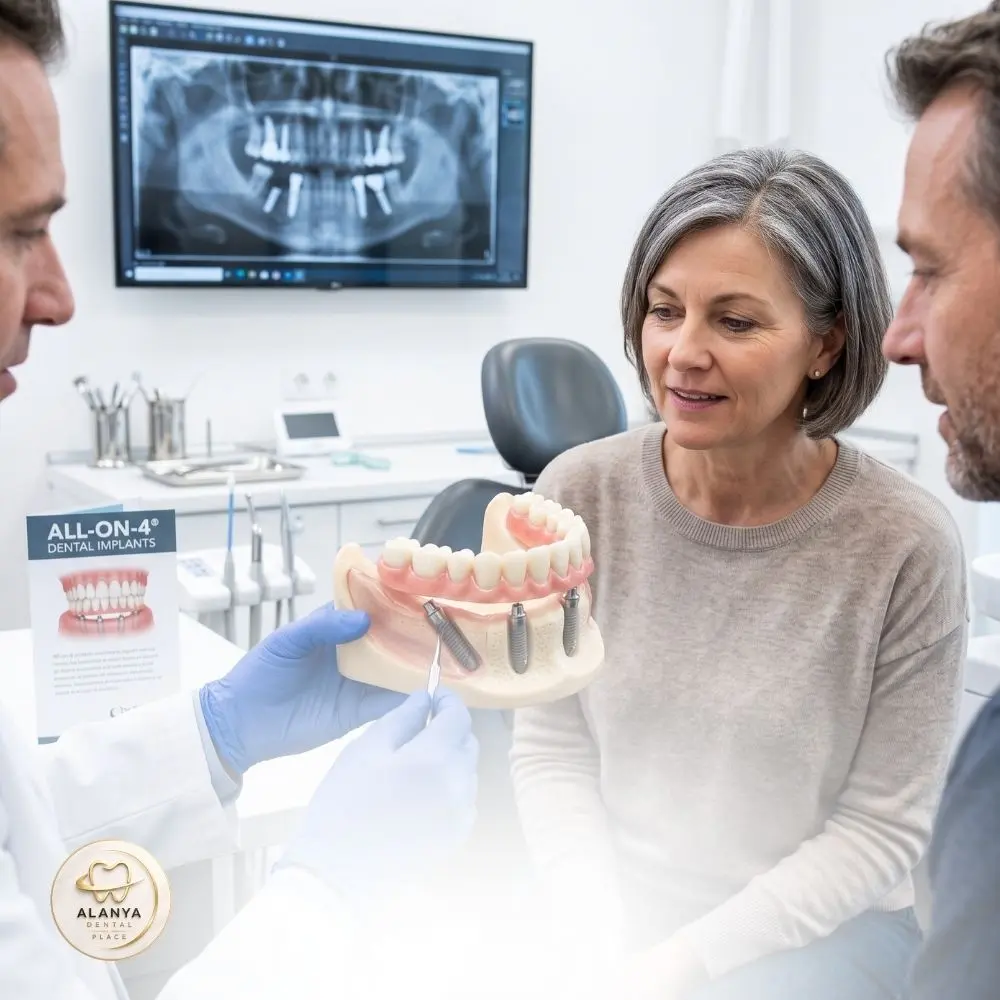
The bone at the front of the jaw is usually denser than at the back, and it has shrunk less. In All-on-4, the 2 front implants go in straight. The 2 back implants are tilted at about 30 to 45 degrees to make the most of the bone. The tilt helps them avoid the nerve in the lower jaw and the sinus in the upper jaw. It also spreads the implants over a wide base, so 4 implants can give enough support for a full set of teeth.
Digital planning and guided surgery
Before surgery, we take a 3D scan (CBCT) at our clinic. It shows how dense your jawbone is and where the nerves and sinuses are, to the millimetre. The dentist plans the implant positions on a computer, and a 3D-printed surgical guide transfers this plan to your mouth. The guide helps place each implant at the planned angle and depth, away from nerves and other structures.
Fixed temporary teeth on the same day (immediate loading)
If the implants are stable enough when they are placed, a temporary bridge can be fixed to them on the same day. You do not have to wait for the implants to join with the bone. This is called ‘immediate loading’, and it means you can leave our clinic on the day of surgery with fixed temporary teeth.
Contents
Your first visit usually takes 5 to 7 days. Your second visit, for the permanent bridge, also takes 5 to 7 days. In between, you need 3 to 6 months to heal.
Let us help you plan your visits
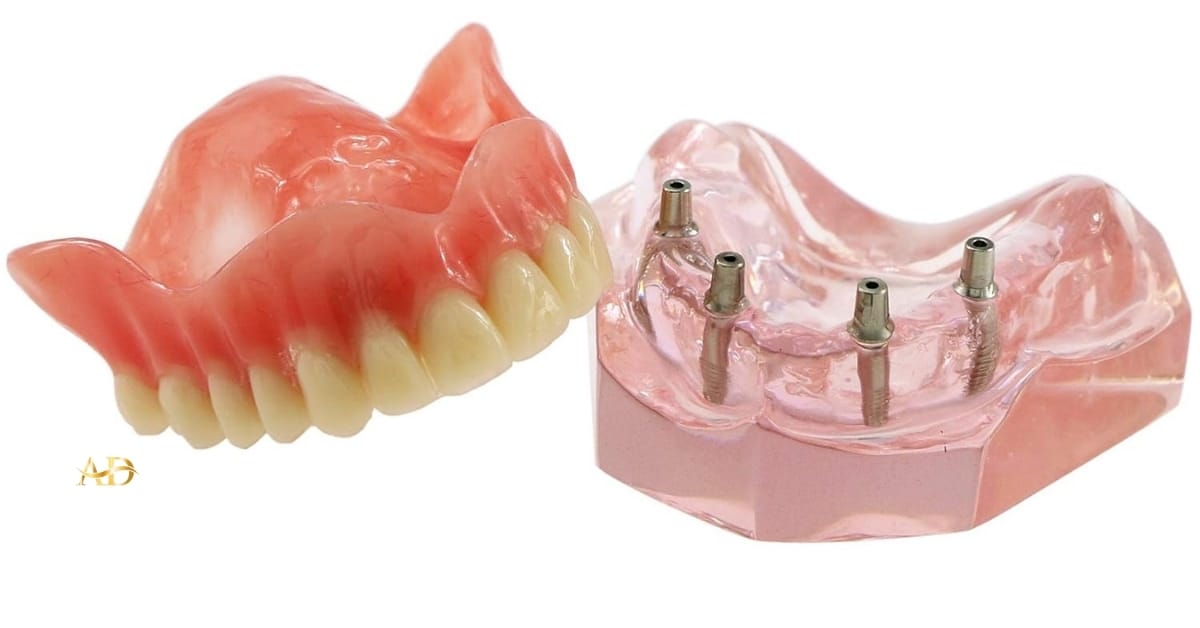
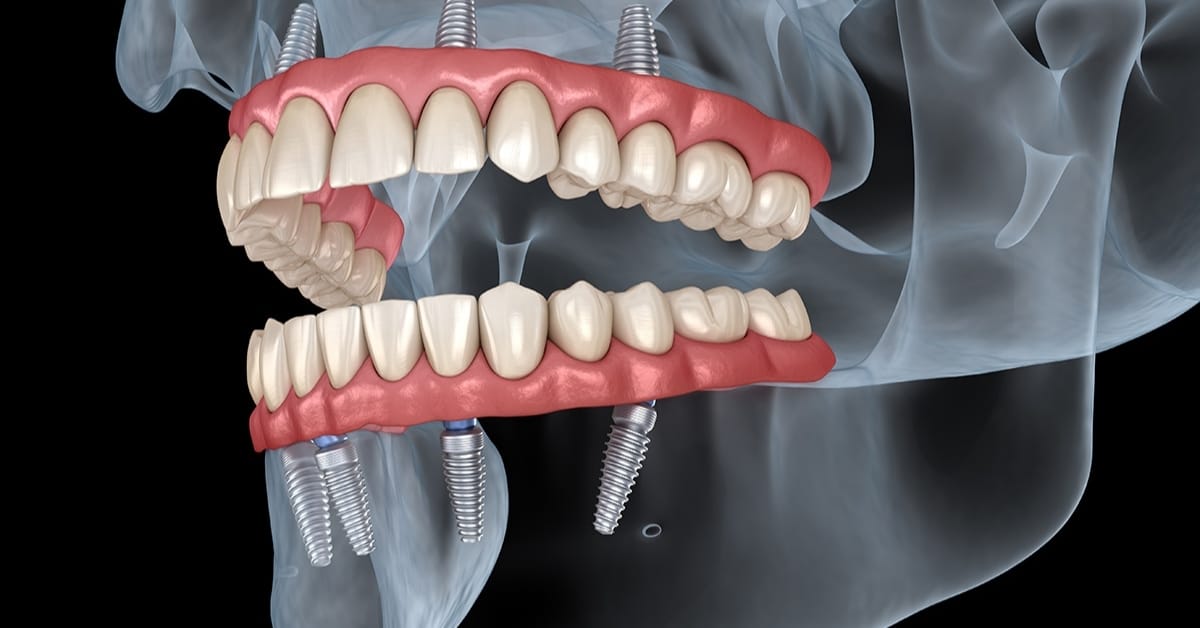
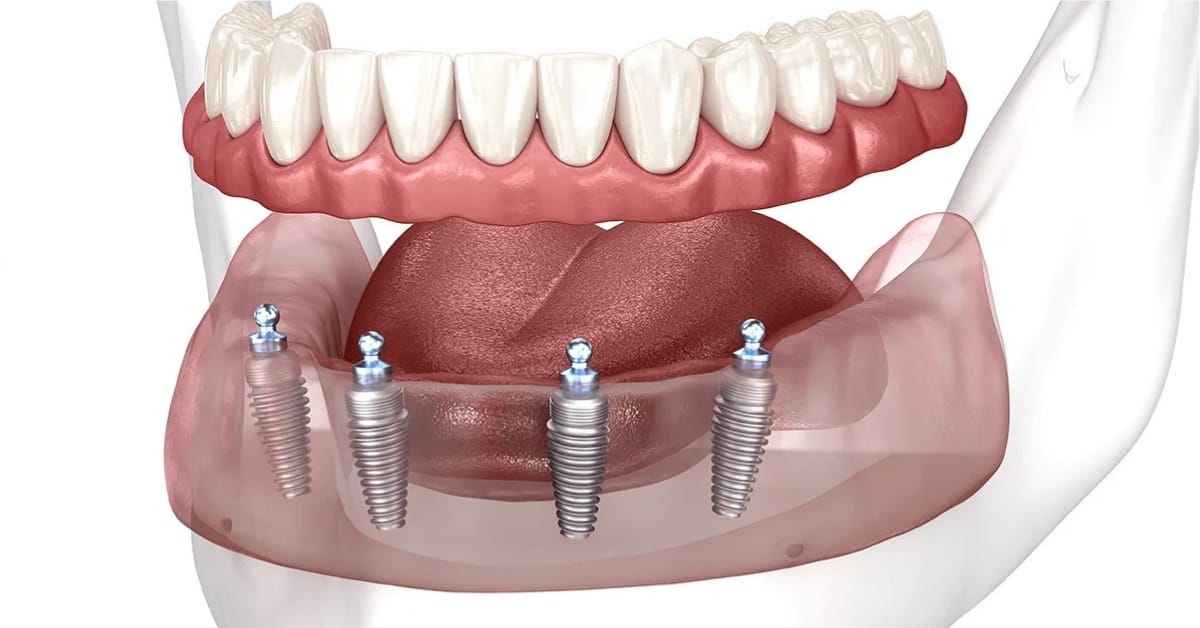
Brands and materials
Implant brands and bridge materials
At our clinic in Alanya, we use international implant brands that are also used in Europe and the US. Your written treatment plan should name the implant brand that will be placed in your jaw.
Materials for the permanent bridge
The standard permanent bridge is acrylic (hybrid). At your second visit, you can choose a monolithic (solid) zirconia bridge on a titanium bar instead. Zirconia can look more natural and usually lasts longer.
What affects the cost of All-on-4?
The cost of All-on-4 depends on your treatment plan. After your scan and examination, you get a written plan with all the costs.
Your final treatment plan and costs are confirmed after a CBCT scan or X-ray and a consultation.
The total cost mainly depends on the implant brand and the bridge material (hybrid or zirconia). It also depends on how many teeth need to come out. In rare cases, extra bone preparation is needed. Smoking or diabetes that is not well controlled can affect healing and may need extra monitoring. For an exact cost, please send us your CBCT scan.
When can All-on-4 help?
You may want to ask about All-on-4 if any of these apply to you.
All-on-4: risks and safety
All-on-4 is surgery, and every surgery has risks. We think it is better to explain them clearly.
Possible complications
An implant can fail to join fully with the bone (osseointegration failure). Other possible problems are inflammation around the implant (peri-implantitis), temporary nerve sensitivity and, rarely, problems in the sinus area. Careful surgical planning and regular check-ups can lower most of these risks.
What affects the outcome
What helps
Enough bone, good daily cleaning, not smoking, well-controlled diabetes, careful surgery with digital planning, and regular check-ups.
Risk factors
Heavy smoking, diabetes that is not well controlled, severe osteoporosis, untreated gum disease, poor daily cleaning and teeth grinding (bruxism).
Before any implant surgery, ask whether a 3D scan (CBCT) and a surgical guide will be used. You should also get written information about the number of teeth and the implant brand. At our clinic in Alanya, no All-on-4 surgery goes ahead without 3D imaging and your written consent.
All-on-4, conventional implants or removable dentures?
How are All-on-6, All-on-8 and All-on-X different?
Depending on your bone and how you chew, your dentist may suggest 6 or 8 implants. With ‘All-on-X’, the number of implants is decided for each patient. The idea is the same: a fixed bridge held by a small number of carefully placed implants. More implants spread the chewing load over a wider area, which can add stability in some cases. Your CBCT scan shows which option suits you, and our All-on-6 and All-on-8 pages explain them in more detail.
Having All-on-4 treatment in Alanya
All-on-4 is major surgery, so choose your clinic with care. Alanya is in Antalya province, and many people from abroad come here for dental treatment.
Experience and equipment
Planning your 2 visits
Recovery and long-term care
The result of All-on-4 depends on the surgery, and also on how you look after your implants while you heal.
Mainly soft and liquid foods for the first 2 weeks
A night guard if you grind your teeth
An implant check-up every 6 months
Daily cleaning with a water flosser
Special interdental brushes for implants
No smoking, especially in the first few months
Mild swelling and tenderness are normal in the first few days. They usually ease within a few days, with the painkillers your dentist prescribes. After your permanent bridge is fitted, regular check-ups help us find problems early, such as inflammation around the implants (peri-implantitis).
Frequently asked questions about All-on-4
Here are the questions our patients ask us most often.
What is All-on-4, and why are only 4 implants used?
With All-on-4, all the teeth in one jaw are replaced by a bridge fixed to 4 implants. The front implants go in straight, and the back ones are tilted at 30 to 45 degrees. This uses the densest bone in the jaw to hold the whole bridge. Because of the tilt, in most cases no bone graft is needed.
How is All-on-4 different from other implant treatments?
With conventional implants, a jaw with no teeth usually needs 8 to 10 implants. A bone graft is often needed too, and treatment can take months. All-on-4 uses 4 implants, and most cases do not need a bone graft. In suitable cases, fixed temporary teeth can be fitted on the same day. This can shorten treatment and lower the total cost.
Who is All-on-4 suitable for?
It can suit people who have no teeth left, have lost most of their teeth, or have teeth that cannot be saved. It is also common for people who have worn removable dentures for a long time and want fixed teeth. The final decision comes after a CBCT scan, which shows your bone density, and an examination.
Does All-on-4 hurt?
The surgery is done under local anaesthetic, so you should not feel pain during the procedure. Sedation may also be possible if you ask for it. Mild swelling and tenderness for a few days afterwards are normal, and prescribed painkillers usually help. Severe or long-lasting pain can be a sign of a problem such as infection, so please contact us if this happens.
How long does All-on-4 take, and how many visits do I need?
You need 2 visits. At the first visit, which usually takes 5 to 7 days, you have the surgery and your fixed temporary bridge is fitted. Then you need 3 to 6 months for the implants to join with the bone. At the second visit, also 5 to 7 days, your permanent bridge is fitted.
Can I have fixed teeth on the same day? Is this possible for everyone?
If the implants are stable enough, a fixed temporary bridge can be fitted on the day of surgery. This is called ‘immediate loading’. It depends on your bone and on how stable the implants are during surgery, so it is not possible for everyone. Your CBCT scan and the dentist’s check during surgery decide this.
What affects the cost of All-on-4?
The cost mainly depends on the implant brand, the bridge material (hybrid or zirconia) and how many teeth need to come out. In rare cases, extra bone preparation adds to it. After your CBCT scan, you get a written plan with the exact costs.
Do clinics in Turkey use the same implant brands?
Many clinics in Turkey use the same international brands as clinics in Europe and the US, such as Nobel Biocare and Straumann. Ask which brand will be used for you, and check that it is written in your treatment plan.
How long do All-on-4 implants last?
With good care and regular check-ups, implants can last 15 to 20 years or longer. How long the bridge lasts depends on its material. Zirconia bridges usually last longer than acrylic or hybrid bridges and need replacing less often. Daily cleaning makes the biggest difference.
Can an All-on-4 implant fail, and what are the signs?
Yes, an implant can fail. Sometimes it does not fully join with the bone. Watch for pain, swelling, redness or a feeling that an implant is moving. If you notice any of these, contact us as soon as you can, so the problem can be treated early.
Do I need a bone graft for All-on-4?
In most cases, no. This is one of the main benefits of the technique. The back implants are tilted, so they avoid the areas where the bone has shrunk most. If bone loss is very advanced, your dentist may suggest a small bone graft in some areas. Your CBCT scan shows whether you need this.
Which implant brands are used for All-on-4?
Brands such as Nobel Biocare, Straumann, Osstem and Medentika have international clinical data behind them. The right brand depends on your case and your budget. Your written plan should name the brand, and the brand should have long-term clinical data.
Should my permanent bridge be acrylic or zirconia?
An acrylic (hybrid) bridge costs less at first, but it may need replacing over time. A monolithic zirconia bridge is more durable, can look more natural and usually lasts longer. You choose the material for your permanent bridge at your second visit.
What can I eat after All-on-4?
For the first 2 weeks, eat soft and liquid foods, such as soup, purées and soft protein foods. You can then slowly return to a normal diet, but avoid hard and sticky foods until your permanent bridge is fitted. With a permanent zirconia bridge, most people can eat almost any food.
How do I look after All-on-4 implants?
Every day, use special interdental brushes for implants and a water flosser. They clean under the bridge better than ordinary floss. Have an implant check-up every 6 months, so problems such as peri-implantitis can be found early.
What is the difference between All-on-4 and All-on-6?
The idea is the same: a fixed bridge held by a small number of implants. All-on-6 uses 2 more implants, which spreads the load and can add stability in some cases. Which one suits you depends on your bone, and your CBCT scan shows this. Our All-on-6 page explains it in detail.
Can I have All-on-4 if I have diabetes?
Yes, if your diabetes is well controlled. Your blood sugar can affect healing and the risk of infection, so we monitor you more closely. If needed, we work with your own doctor. If your diabetes is not well controlled, your blood sugar needs to be stable first.
I smoke. Can I have All-on-4?
Smoking does not always rule out treatment. But it slows down how the implants join with the bone, and this makes implant failure more likely. If you can, stop smoking, or at least cut down, before surgery and while you heal. This lowers the risk.
What if my implants have a problem later?
Implant makers have their own terms for their products. At your first consultation, we give you our aftercare terms in writing. These usually ask you to come to regular check-ups and follow the care routine we recommend.
Is there an age limit for All-on-4?
There is no upper age limit. Older people in good general health can also have treatment. The lower limit is about 18, when the jawbone has finished growing, because implants placed earlier may become loose over time. At any age, your general health and your bone matter most.
Sources



Send us your panoramic X-ray or 3D scan (CBCT). We will check whether All-on-4 may suit you and send you a written plan with the costs.