Dental implants
A dental implant replaces a tooth that has been taken out, has broken or has fallen out over time.
At our clinic in Alanya, we offer same-day implants, full-mouth implants and a treatment plan for each patient.
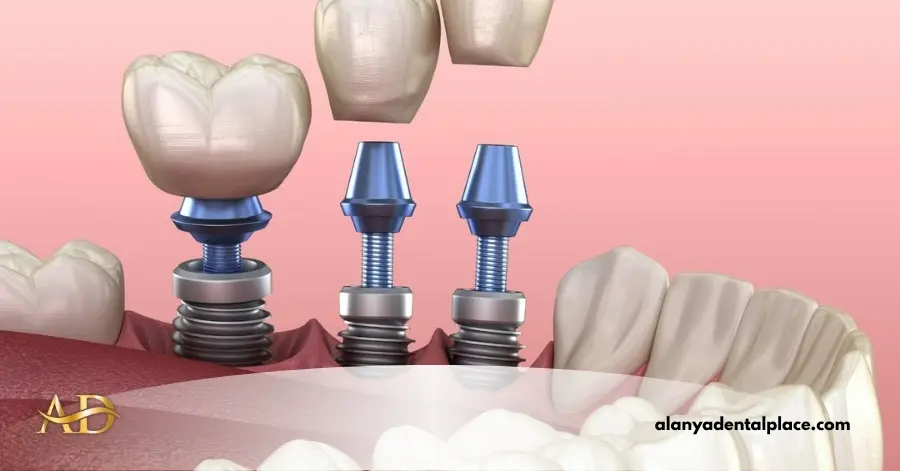
At Alanya Dental Place, tooth extractions are done under local anaesthetic. In suitable cases, the implant can be placed in the same appointment. We use international implant brands such as MegaGen, Neodent and Straumann. Your dentist chooses the system that suits your mouth and jawbone.
What is a dental implant?
A dental implant replaces the root of a missing tooth. A new tooth (a crown) is then fixed on top, made to look like your natural teeth.
The implant is a small post made of titanium or a titanium alloy, placed in the jawbone. Titanium is used because it is strong and the body generally accepts it well. The aim is a tooth that looks and works like a natural tooth and lasts a long time.
When are dental implants used?
- Missing teeth
- Improving how your teeth look
- Problems with chewing or speaking
- Supporting the jawbone
- Holding dentures or bridges in place
- A more natural, long-term option
Who are dental implants for?
Implants suit many people with healthy gums, enough jawbone and good general health. These are the main things that decide whether implants are right for you:
- Healthy gums and jawbone: Implants need healthy gums and enough jawbone to join with. If the bone is too thin or not dense enough, you may need a bone graft first.
- General health: You need to be in good general health. Long-term illness, a weak immune system (immunosuppression) and diabetes that is not well controlled can affect whether the implant is successful.
- Not smoking: Smoking makes it less likely that the implant will join with the bone, and it slows healing. If you smoke, it is best to cut down or stop.
- Cleaning your teeth well: Brushing, flossing and regular check-ups are essential for implants to last.
- Age: Age alone does not usually rule out implants. Healthy older people can also have them, but the dentist will consider their general health and lifestyle.
- Fitness for surgery: Implant treatment involves surgery, and not everyone is well enough to have it.
Everyone is different, so a dentist needs to check your mouth and your health before deciding on a treatment plan.
How is a dental implant placed?
First, the dentist examines you and listens to your concerns. If the treatment plan shows that a tooth or teeth need to come out, the dentist may suggest implants to replace them.
If you agree, the next step is a more detailed check. You have a 3D scan (CBCT), so the dentist can look at the bone where the implant will go.
Then the dentist numbs the area with a local anaesthetic and starts the procedure. The implant can sometimes go into the empty socket straight after the tooth is taken out. This is possible if the bone is suitable and there is no infection.
Contents
The implant treatment process
Implant surgery
Back to daily life
Total treatment time
The 4 stages of implant treatment
First, the dentist checks your mouth, your jawbone and the gaps where teeth are missing. A 3D scan (CBCT) helps to plan the implant accurately.
The dentist places the titanium implant in the jawbone under local anaesthetic, so the area is numb. The procedure is usually short.
Over time, the implant joins with the jawbone (osseointegration). This can take several months, depending on your bone. It is an important step for the implant to last.
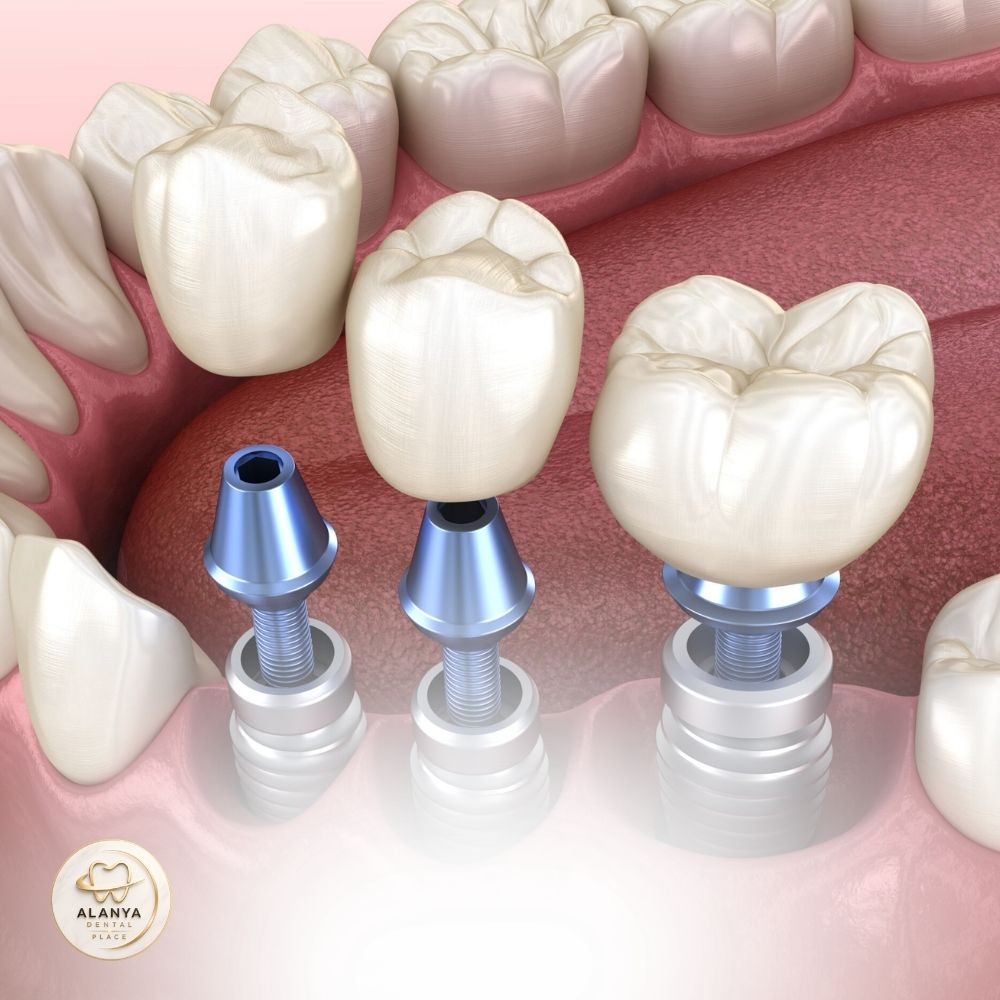
When healing is complete, the dentist fixes a porcelain or zirconia tooth (crown) onto the implant. The aim is a new tooth that is strong and looks natural.
Types of dental implants:
Which type suits you?
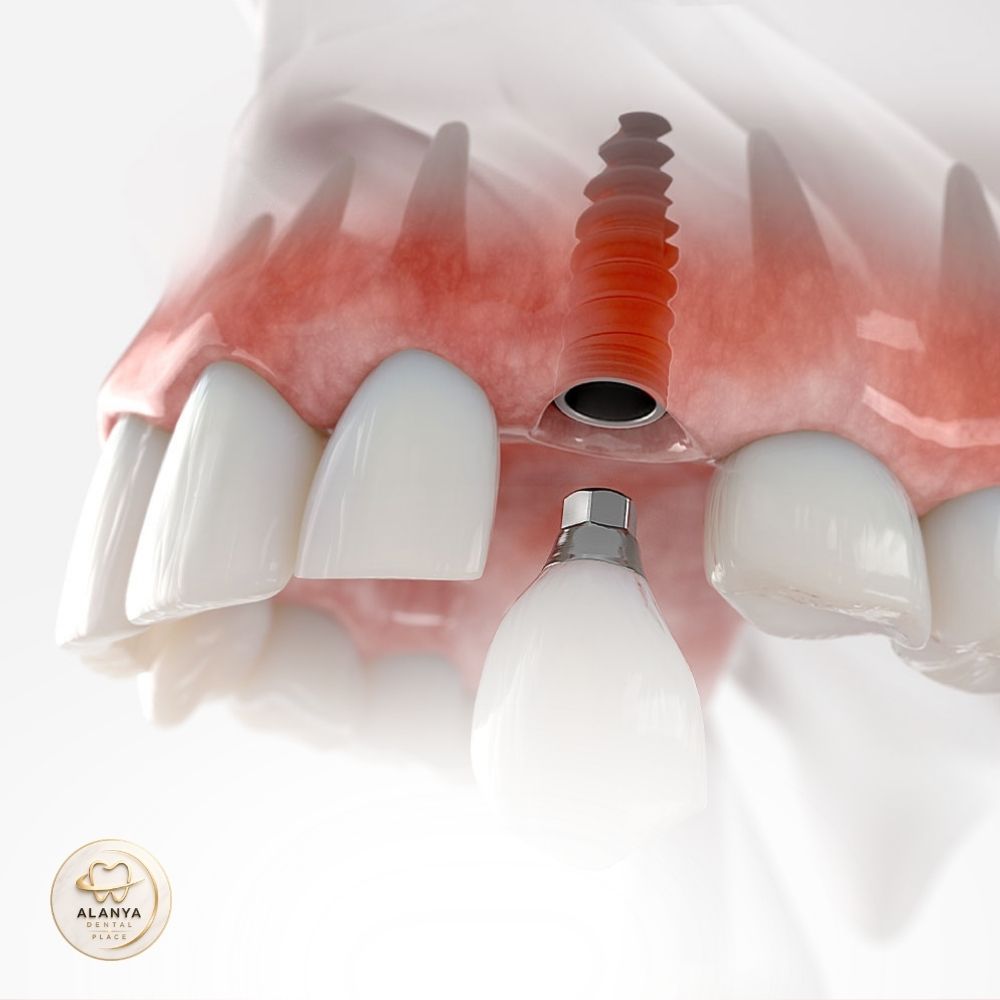
With same-day implants, the implant is placed in the same appointment as the tooth extraction. This means you do not have to go without a tooth for long.
Digital planning helps here. If the implant is stable enough, a temporary tooth can be fitted on the same day. This can be a good option for front teeth.
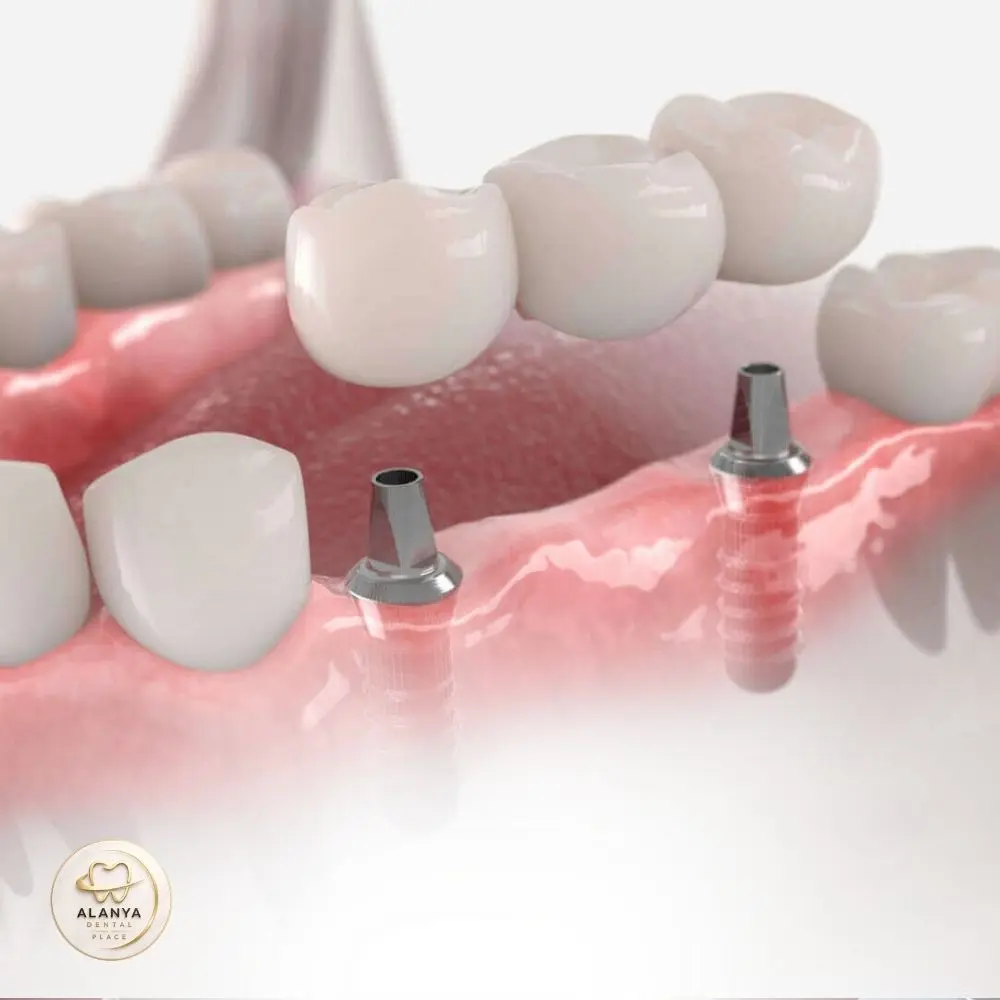
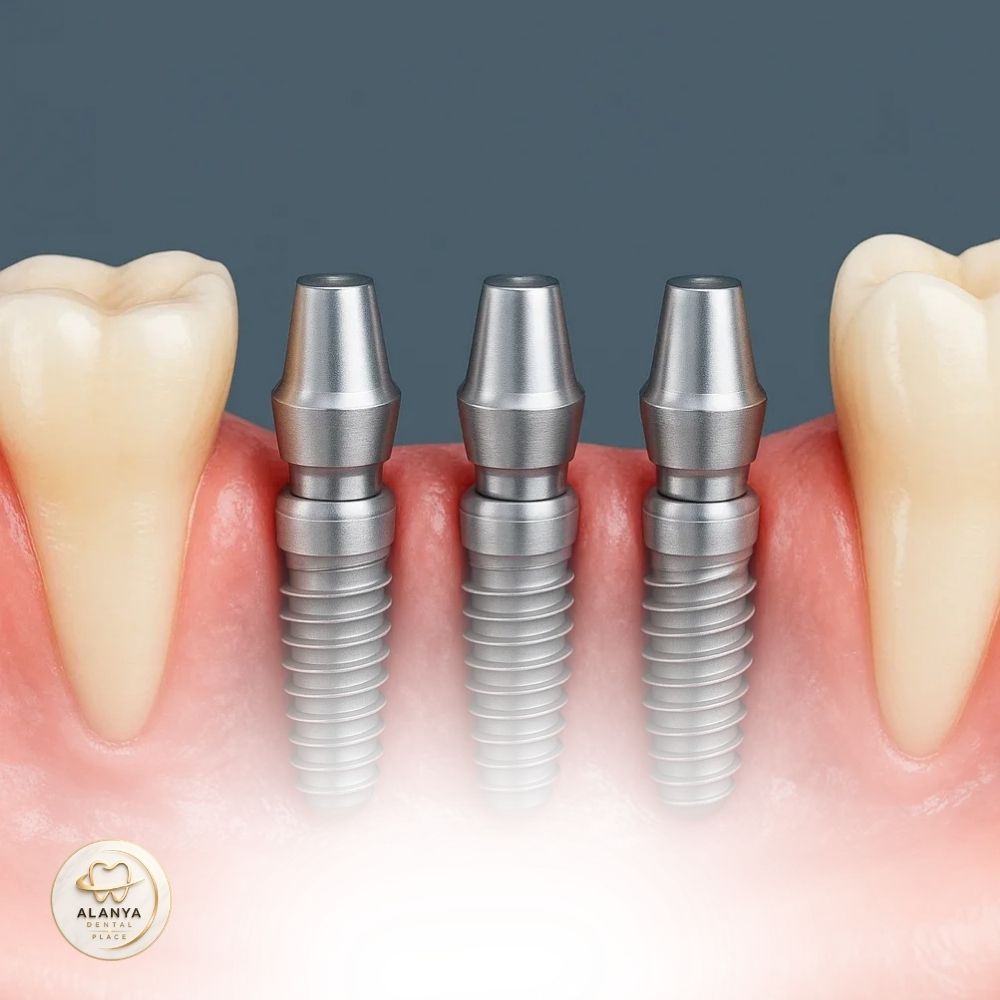
All-on-4 and All-on-6 give people who have lost all their teeth a set of fixed teeth. With All-on-4, a full set of teeth for one jaw is fixed to 4 implants. All-on-6 uses 6 implants, which gives more support.
The teeth are fixed in place, so they do not come out like removable dentures. This can make chewing more comfortable and improve how your teeth look.
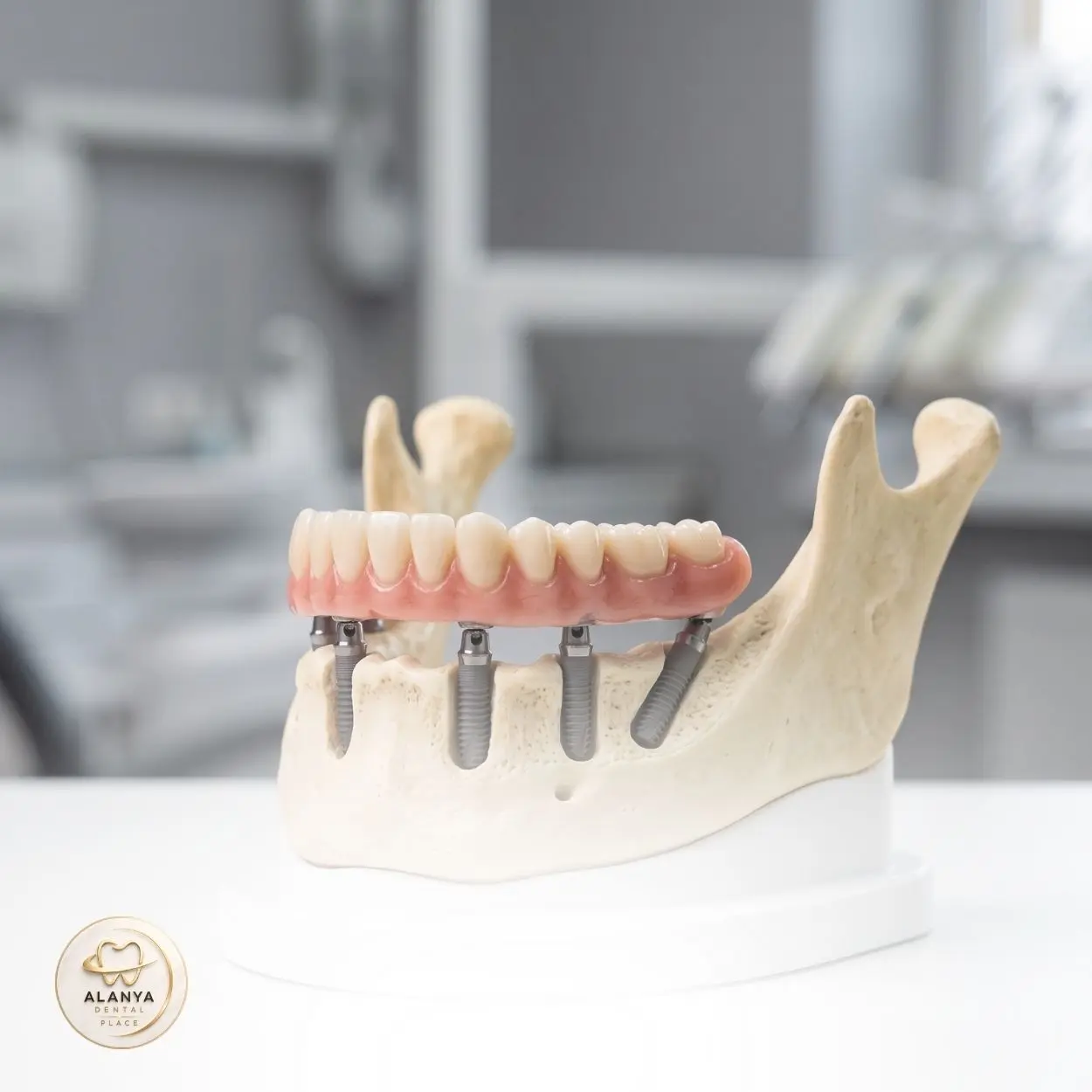
A single implant replaces one missing tooth. The implant goes into the jawbone and works like a tooth root. A porcelain or zirconia crown is then fitted on top.
The teeth next to the gap are not touched. The new tooth helps you chew and is designed to look like your own teeth.
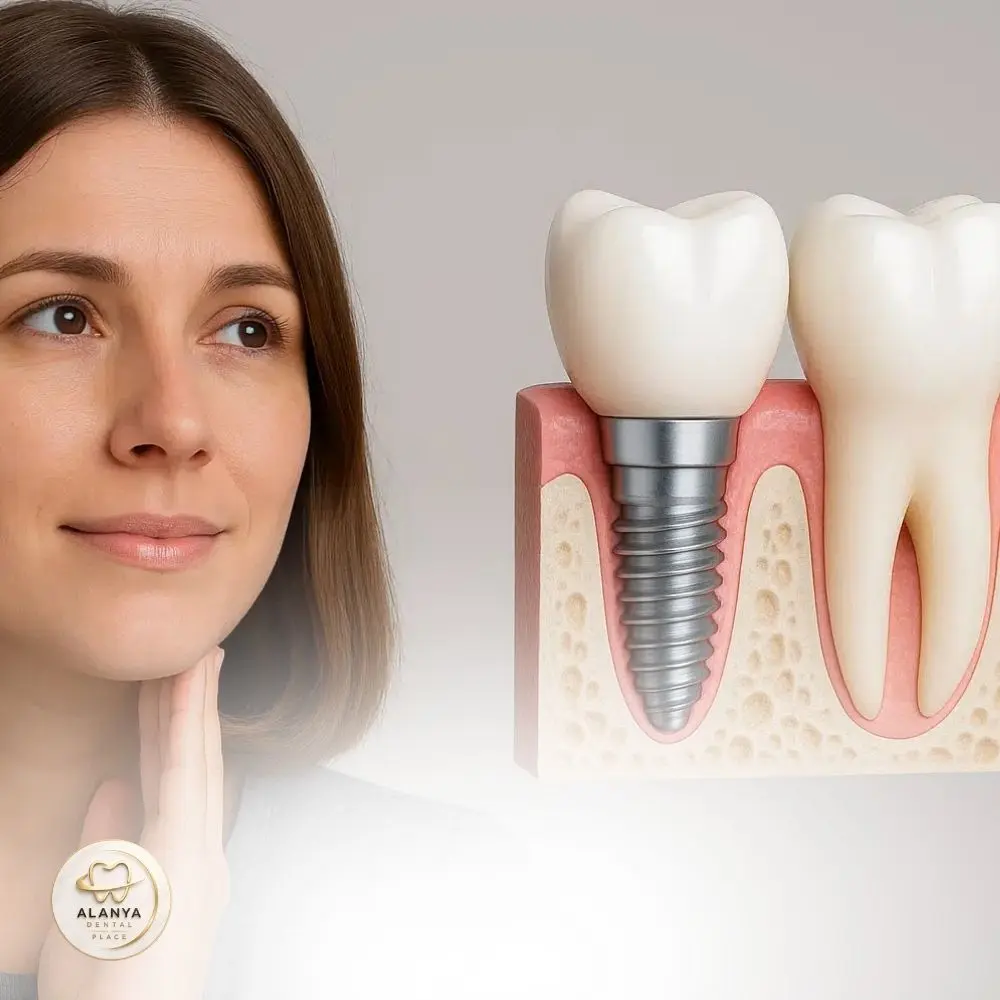
Full-mouth implants are for people who have lost all their teeth. Implants are placed in the upper and lower jaws, and a full set of fixed teeth is attached to them.
This can make chewing and speaking easier, and you no longer need removable dentures. The new teeth are fixed and designed for long-term use.
Does implant surgery hurt?
Implant surgery is usually done under local anaesthetic. It numbs the area where the implant goes, so you should not feel pain during the procedure.
When the anaesthetic wears off, mild to moderate pain, swelling and discomfort are normal after surgery. They are usually worst in the first few days, then slowly get better.
Your dentist will usually recommend painkillers, either from a pharmacy or on prescription. Follow the aftercare advice to reduce swelling and help you heal. This also helps the implant join with the bone.
Everyone feels pain differently. Some people have very little pain after implant surgery, and others have a bit more. For most people, the pain is manageable.
If you have questions about implant surgery, please contact us.
Is it safe to have dental implants in Turkey?
Implant treatment, like any surgery, has some risks. It is safer when the clinic is licensed, the implant system is approved and the treatment is carefully planned.
In Turkey, licensed dental clinics are regulated by the Ministry of Health. Implants must have CE or FDA approval. You can ask which implant system will be used for you.
How long do dental implants last?
With good care, dental implants can last 20 years or longer. How long they last depends on the implant system, the dentist’s experience, how well you clean your teeth and your jawbone.
With regular check-ups and good daily care, implants can work well for many years. Smoking, poor cleaning and teeth grinding (bruxism) can shorten their life.
Why Alanya Dental Place?
Implant treatment is about more than the teeth. Trust and careful planning matter, and so does how the result lasts over time. At Alanya Dental Place, an experienced team uses modern technology and plans each treatment around you.
We use digital implant planning, well-known implant brands and strict sterilisation. Every treatment, from a single implant to a full mouth, is planned after a detailed check.
At our clinic, we aim for:
- Results that look natural
- Clear information about costs
- Treatment that is as comfortable as possible
- Implant treatment that follows international standards
- Treatment that is designed to last
Alanya Dental Place offers implant treatment that aims for a healthy, strong and natural-looking smile.
Why do people come to Turkey for dental implants?
Turkey has become a popular place for dental implant treatment. Before you decide, it helps to know how treatment works and what to ask.
Choosing a dental implant
The brand is not the only thing that matters. The dentist’s experience, the implant technology and the clinic’s sterilisation standards are important too.
Ask your dentist which implant system they suggest for you, and why. You can also ask about the other treatment options.
Implant systems and treatment options
Both Turkish-made and imported implant systems are available in Turkey. Turkish and Korean brands are common choices.
Options range from a single implant to implants for the whole mouth.
Full-mouth dental implants
Full-mouth dental implants give people who have no teeth left a full set of fixed teeth. The most common types are All-on-4 and All-on-6.
Some full-mouth treatments use 12 to 16 implants in total, in the upper and lower jaws. The implant system, the choice of zirconia or porcelain teeth and your jawbone all affect the total cost.
Many people travel to Turkey for dental treatment. At our clinic in Alanya, experienced dentists carry out implant treatment in modern surroundings.
Here are some things to know before implant treatment in Alanya:
Dentists: Implant treatment needs dentists and surgeons with the right training. You can ask who will treat you and what experience they have.
Equipment: Modern clinics use digital X-rays, 3D scans (CT) and 3D printers to plan and carry out treatment.
Rules and standards: Dental clinics in Turkey are regulated by the Ministry of Health. The Turkish Dental Association also helps to maintain professional standards.
Travel: Turkey is a short flight from many European countries.
Help with your stay: We can help you arrange accommodation and transport in Alanya.
All-on-4 and All-on-6 are treatment plans for people who are missing many or all of their teeth. Implants are placed in one or both jaws to hold fixed teeth.
Only a few implants are needed to hold all the new teeth.
Implants need enough jawbone to hold them. If you do not have enough bone, these methods can make implant treatment possible:
- Bone graft (adding bone)
- Sinus lift (adding bone in the upper jaw)
- Reshaping the jawbone (alveoloplasty)
- Mini dental implants (smaller implants)
Benefits of dental implants
Dental implants are an effective way to replace missing teeth. Here are some of their benefits:
Look and comfort: Implants look and feel similar to natural teeth. The dentist can match the colour, shape and size of the new tooth to your other teeth.
Eating and speaking: Implants do the work of the missing teeth, so chewing and speaking can become easier.
Jawbone support: When a tooth is missing, the jawbone can shrink over time. An implant keeps the bone in use, which can help to prevent this.
Long-term option: With good care, implants are designed to last for many years. They can last longer than some other options.
Neighbouring teeth are left alone: A bridge may need the healthy teeth on each side to be filed down. An implant goes into the jawbone, so the teeth next to it are not touched.
Instead of dentures: Implants are more stable than removable dentures (false teeth), full or partial. This can make speaking and chewing easier.
Care like your own teeth: You look after implants like natural teeth, with brushing, flossing and regular check-ups.
Dental implant brands
Alanya Dental Place works with implant systems from these brands:
- Straumann (Switzerland)
- Nobel Biocare
- Astra Tech
- Osstem
- Neodent
- MegaGen
- BioHorizons
- BEGO (Germany)
- Anthogyr
- Dentium
- Zimmer Biomet
- MIS
- Camlog
- Dentsply Sirona
- Hiossen
- Thommen Medical (Switzerland)
- ICX (Germany)
- Blue Sky Bio
What is dental implant surgery?
In implant surgery, the dentist places a titanium implant where a tooth is missing, so that it can join with the jawbone. Digital planning and a 3D scan (CBCT) help to plan the surgery. The aim is a new tooth that looks good and works well.
Implant consultations and how to contact us
A consultation can start online. You send us your X-rays, and we give you a treatment plan and information about costs. You can contact us on WhatsApp, Telegram or by phone.
What to know before you have dental implants
Before implant surgery, you need a 3D scan of the jawbone (CBCT). The dentist also checks your gums and your general health. Smoking, diabetes and a lack of bone all affect the treatment plan. The planning and the implant system also affect the result.
Why we do not publish patient reviews
Turkish rules on health advertising do not allow clinics to publish patient reviews or ratings. This is why you will not find them on our website.
You can ask us how your treatment would be planned and what aftercare you would have.
Sources
- Mayo Clinic – Dental Implant Surgery
The implant process, types of implants and details of the surgery. - Cleveland Clinic – Dental Implants Overview
The benefits of implants, recovery and how long they last. - Cleveland Clinic – What To Expect From Dental Implants
The stages of treatment, how the implant joins the bone and what patients can expect. - American Academy of Implant Dentistry (AAID)
Information on implant treatment from a US professional body. - American Dental Association – Dental Implants
A guide to implant treatment and care from the ADA. - International Team for Implantology (ITI)
Scientific guidance and research on implant treatment. - Nobel Biocare Official Website
Manufacturer’s information on its implant systems and digital planning. - Straumann Group
Manufacturer’s information on its implants and research on how implants join the bone. - Osstem Implant Global
Manufacturer’s information on its implant systems. - Dentsply Sirona Implants
Manufacturer’s information on digital implant planning and implant restorations. - European Association for Osseointegration (EAO)
Scientific publications on implant dentistry in Europe. - Columbia University College of Dental Medicine – Dental Implants
University information on implant treatment and surgery. - Johns Hopkins Medicine – Oral Health Resources
Information on oral health and care after implants. - Harvard School of Dental Medicine
Dental research, including studies on implants. - Verywell Health – Dental Implant Failure Causes
Why implants can fail, and the risk factors.
Do you have any other questions?
Frequently asked questions
Questions about treatment
About dental implants
A dental implant is a small titanium post that replaces the root of a missing tooth. At Alanya Dental Place, we aim for implant teeth that are strong and look natural.
The dentist places a titanium screw (the implant) into the jawbone under local anaesthetic. In suitable cases, it can be placed on the same day as a tooth extraction.
Implants usually suit people who have enough jawbone and are in good general health. They can replace a single missing tooth or all the teeth.
Implant treatment usually takes 2 to 6 months, depending on your jawbone. In some cases, a temporary tooth can be fitted on the same day as the implant (same-day loading).
Implants are placed under local anaesthetic, so you should not feel pain during the procedure. Afterwards, some soreness and swelling are normal.
The first stage of healing takes 1 to 2 weeks. The implant then takes 2 to 4 months to join with the bone (osseointegration).
Do not eat for 2 to 3 hours after implant surgery.
With good care and regular check-ups, an implant can last for many years. Smoking, poor cleaning and gum disease can shorten its life. The implant system and how well the surgery is done also matter.
Yes, an implant can fail. The risk depends on your bone, the dentist’s experience and the implant system. Careful planning lowers the risk.
With careful planning and a porcelain crown, an implant tooth can look like a natural tooth.
Health questions
Yes, if your diabetes is well controlled. Diabetes that is not well controlled makes implant failure more likely. If your blood sugar is stable, the dentist can plan treatment with the right precautions.
Yes. Smoking slows down bone healing and raises the risk of infection. Implants are more likely to fail in people who smoke, so we recommend that you stop smoking.
It may be possible. Tell your dentist that you have osteoporosis and which medicines you take for it. The dentist checks your bone first. If there is not enough bone, a bone graft or sinus lift can be done before the implant.
Yes, if your general health allows it. There is no upper age limit. What matters is your jawbone and how well any health conditions are managed. Many older people have implants.
Implants are not recommended during pregnancy. Surgery that is not urgent should wait until after the birth. It is best to plan implants for before or after pregnancy.
Allergy to titanium implants is very rare. If you are sensitive to metals, tell your dentist. In rare cases, another option can be planned.
Questions about us
We use implant systems such as MegaGen, Neodent and Straumann. Your dentist chooses the system that suits your mouth and jawbone.
Implant makers have their own terms for their products. Our aftercare depends on your treatment, so please ask us about it before you start. With regular check-ups, implants can work well for many years.
Turkish rules on health advertising do not allow clinics to publish before-and-after photos. At your consultation, the dentist can explain what to expect.
We have our own dental laboratory, and we give you an implant passport with the details of your implant. We use digital planning and certified materials, with a focus on patient safety.
Questions about cost and travel
Clinical standards and careful planning affect quality more than the price does. The same international implant brands are used in Turkey as in other countries.
Every treatment has risks, in Turkey or anywhere else. Experienced dentists, approved implant systems (CE or FDA), good sterilisation and careful planning help to keep the risks low.
The cost depends on your treatment plan. The implant system, the condition of your jawbone and the type of crown, such as zirconia, all affect it. Please contact us to ask about your own plan.
Yes. The same global implant brands are used in Turkey. You can ask us which implant system will be used for your treatment.
It usually covers the implant (the screw), the abutment (the connector), the new tooth (crown) and the surgery. X-rays, a bone graft or more complex surgery can add to the cost. This can vary, so check your treatment plan.
Yes. You can send us your X-rays, for example by WhatsApp, and we start planning from them. We then explain your treatment options and the costs.
Yes. We can help you arrange accommodation and transport in Alanya. Ask us when you plan your visit.
Questions about types of treatment
A single-tooth implant replaces one lost tooth with a titanium root and a crown. The teeth next to it do not need to be touched. It is a long-term option.
All-on-4 gives people with no teeth in a jaw a full set of fixed teeth on 4 implants. It is a common way to have fixed teeth instead of dentures.
The dentist places 6 implants in the jaw and fixes a full set of teeth to them. With 6 implants, the teeth have more support for chewing.
The first stage usually takes 3 to 7 days: the surgery and fitting temporary teeth. The permanent teeth are fitted after 2 to 4 months, depending on how the bone heals.
Yes, if there is enough bone and no infection (an immediate implant). The tooth is taken out, the implant is placed and a temporary tooth can be fitted, all on the same day.
Yes, if there is enough bone. If bone has been lost, you may need a bone graft or another technique first.
A zirconia crown covers a tooth you still have. It does not replace a missing tooth. An implant replaces the root of a missing tooth, and a crown is then fixed on top of it.
Other questions
Many clinics in Turkey are used to treating patients from abroad. They use the same international implant brands as clinics in other countries.
Think about how many visits you will need and how long each stay will be. Ask which implant system will be used, and what happens if you have a problem when you are back home.
Yes. Our patients come from many countries, and our team can help you in several languages.
Full-mouth dental implants replace all the teeth with fixed teeth held by implants. All-on-4 and All-on-6 are common ways to do this.
Find out who will do the surgery and whether a 3D scan (CBCT) is used for planning. Ask whether genuine branded implants are used and how instruments are sterilised. Choosing on price alone can increase the risk of implant failure.