Dental crowns in Alanya, Turkey
At our clinic in Alanya, we make zirconia and porcelain crowns for teeth that are broken, decayed or discoloured. Our experienced dentists use digital technology (CAD/CAM) to plan and make each crown. We use materials from international brands.
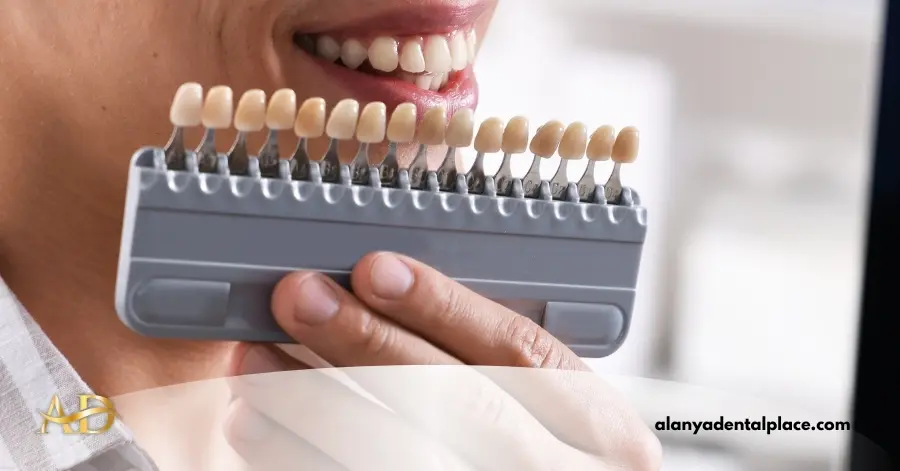
What is a dental crown and who is it for?
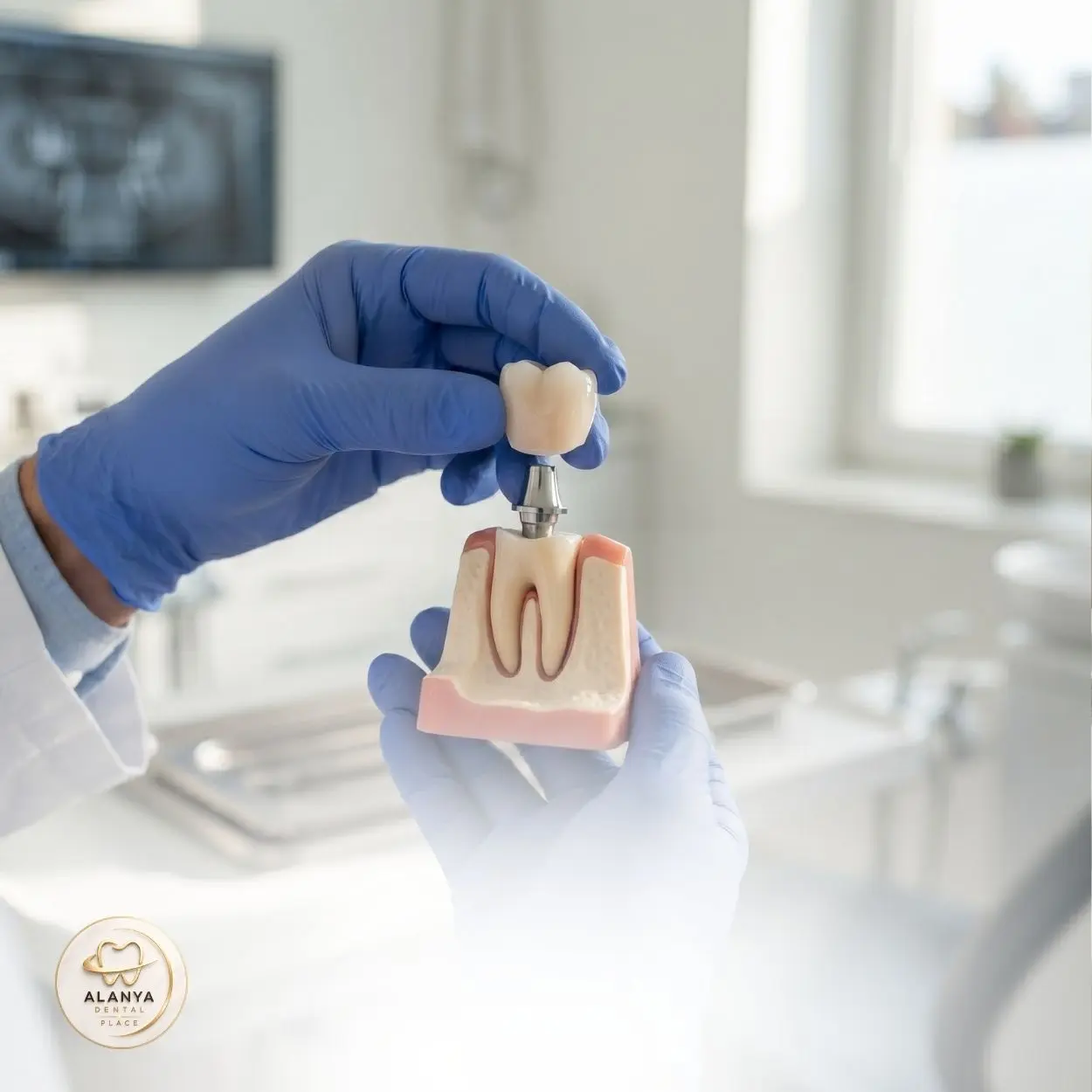
A dental crown, often called a ‘cap’, is a cover made to fit your tooth. It covers the whole visible part of the tooth. Crowns are used for teeth that are decayed, broken or worn down, or have had root canal treatment. A crown is fixed in place, so you do not take it out.
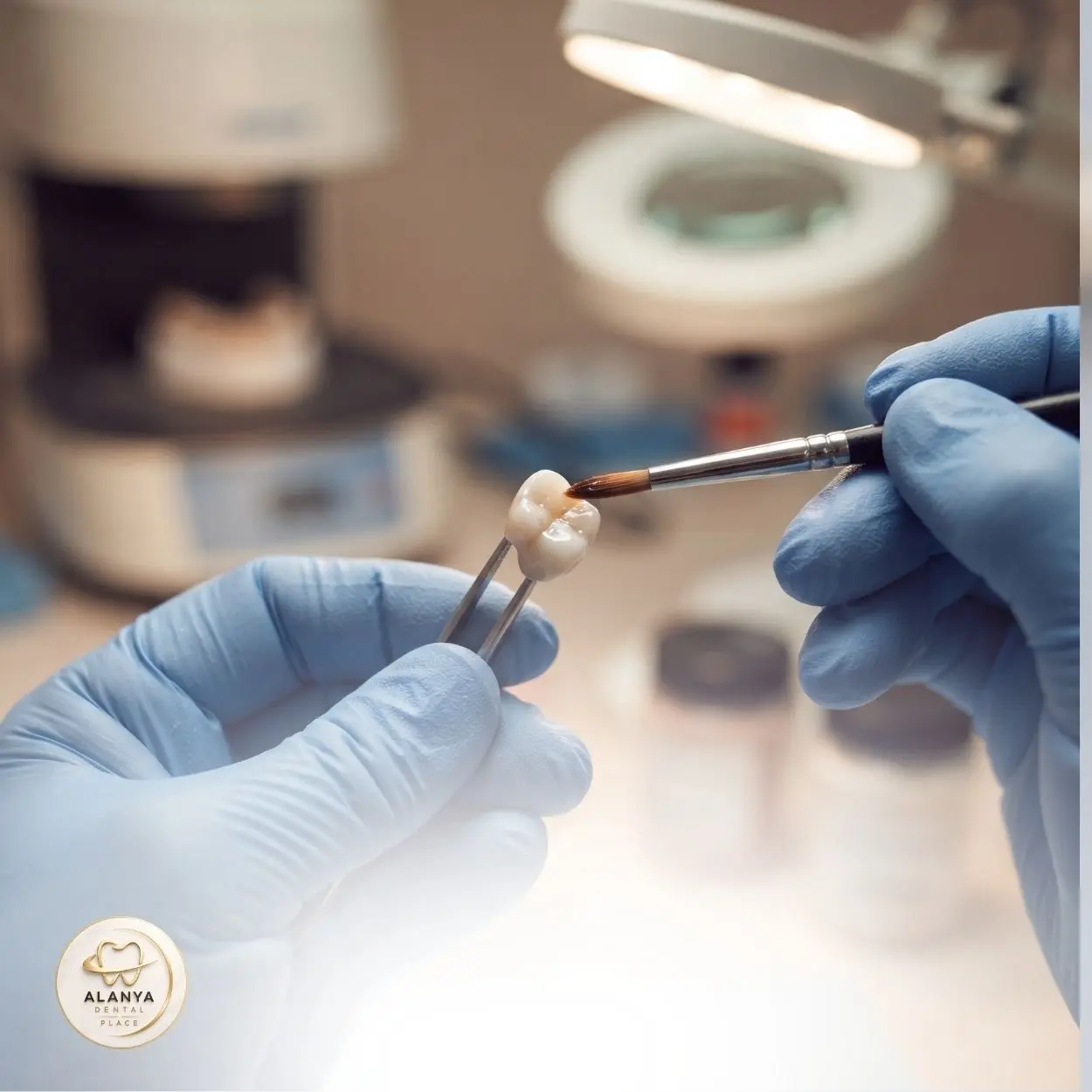
First, the dentist removes any damaged part of the tooth. They then shape the tooth by removing a thin layer from its surface, so the crown fits properly. Next, the dentist takes a digital scan or a traditional impression and sends it to the laboratory. The laboratory makes the crown to match the colour, shape and size of the teeth next to it.
A crown is not only a cosmetic treatment. It can protect a brittle tooth after root canal treatment, or support a tooth weakened by a large filling. It can also repair a cracked or broken tooth, or improve a tooth with a poor colour or shape. A crown is possible if the root and the bone around it are strong enough. If not, the dentist will suggest other options, such as a crown on an implant.
A crown is different from a bridge, a veneer or an implant. A bridge uses the teeth on each side of a gap for support. A veneer covers only the front of the tooth, so less of the tooth needs to be removed.
A dental implant replaces the root of a missing tooth. It is placed during surgery, and a crown is then fixed on top. The dentist decides which treatment is right for you after an examination and X-rays.
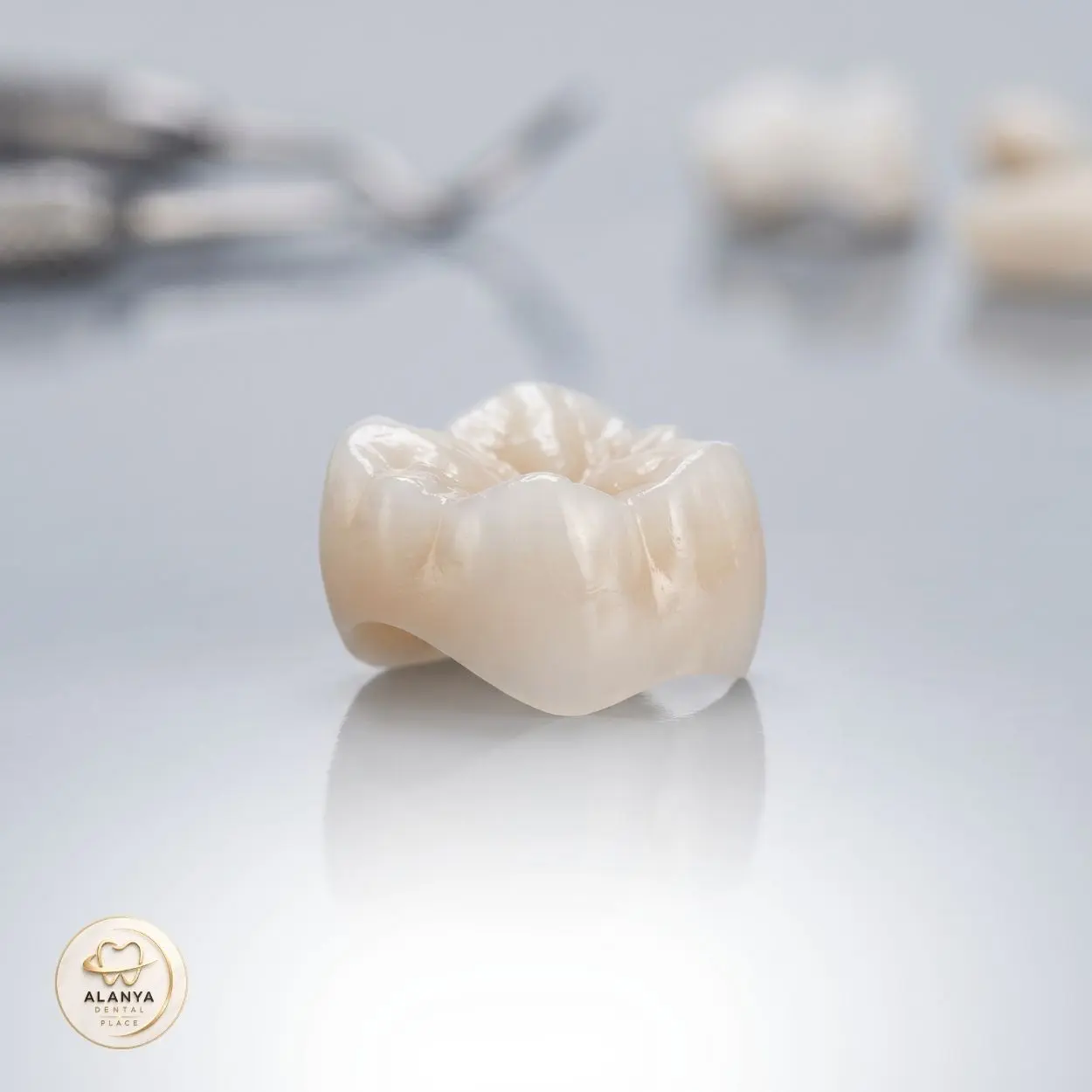
Types of dental crowns and materials compared
Which material is used depends on the tooth’s position, how hard you bite and how you want it to look. The table below compares the 5 types of crown we use most often at our clinic in Alanya.
* How long a crown lasts is an estimate, based on data from material makers and general clinical experience. It depends on how you clean your teeth, how you chew and whether you have regular check-ups. We cannot promise a particular result.
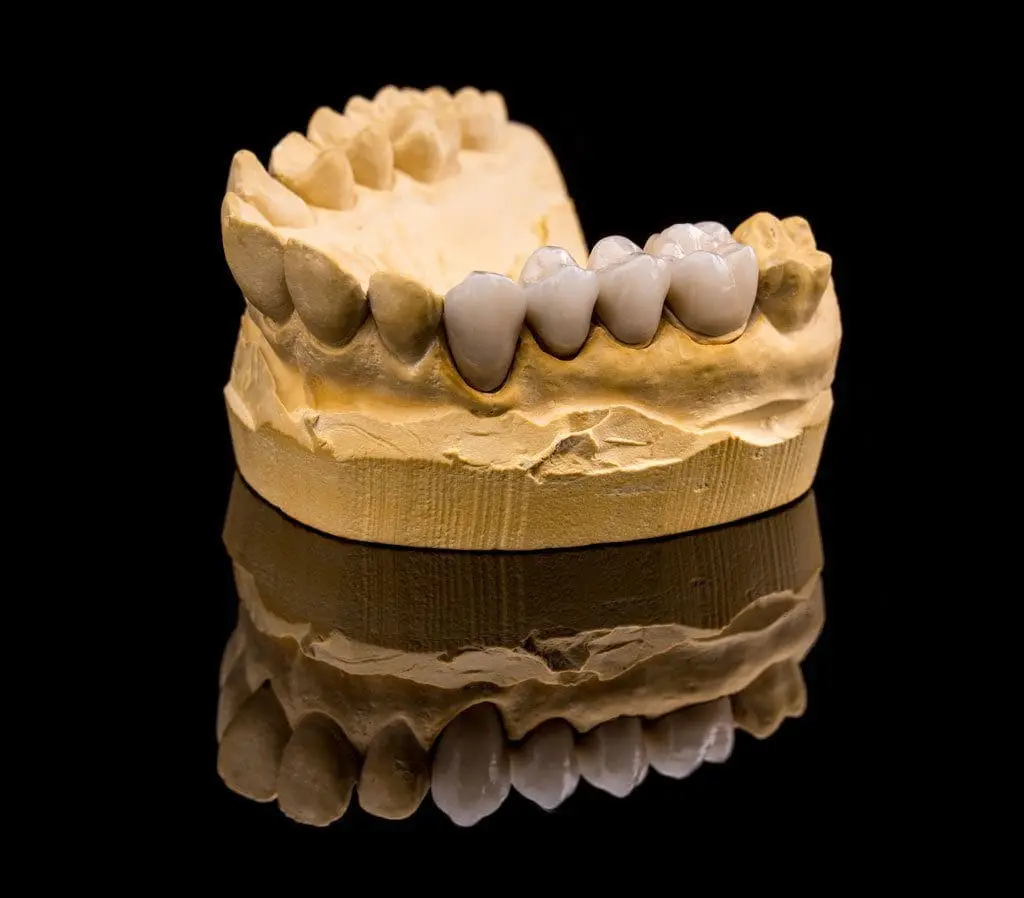
Zirconia contains no metal. The risk of an allergic reaction is very low, and it does not cause a grey line at the gums. It is very strong when you chew, and it lets light through in a similar way to natural tooth enamel.
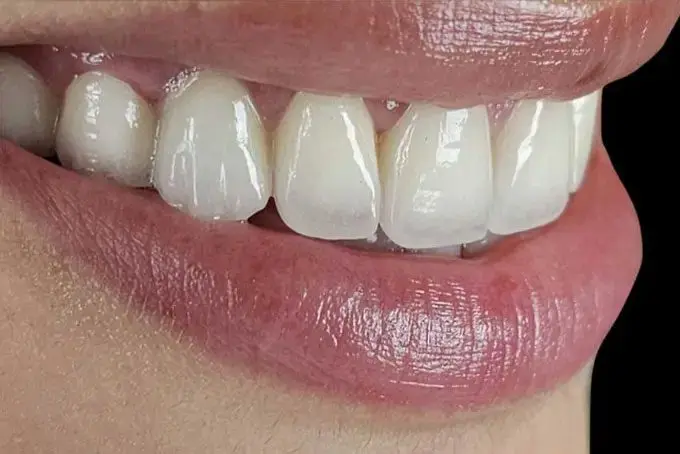
Making zirconia crowns needs more digital equipment, so the laboratory cost is a little higher than for porcelain-fused-to-metal (PFM) crowns. Like any crown, a zirconia crown can break if you bite on something very hard.
Dental tourism
Coming to Alanya for dental crowns
Costs explained
The cost of a crown depends on the material and how complex your treatment is. After your examination, your dentist explains your treatment plan and the final cost.
Experience with patients from abroad
Many people travel to Turkey for medical care. Because of this, many clinics have experience with patients from abroad and can help in several languages.
Time between appointments
Alanya is a holiday town on the Mediterranean coast. While the laboratory makes your crown, you can enjoy the beach, historic sites and local food.
Digital dentistry
We use digital scanning (CAD/CAM), 3D images of the inside of the mouth and computer-aided smile design. These make taking impressions quicker and help the crown fit well.
International materials
For zirconia and ceramic crowns, we use well-known laboratory brands that dentists use around the world. These materials must meet international standards, wherever the treatment takes place.
Help with your stay
We can help with airport transfers and accommodation, and with a driver or guide during your treatment.
Our dentists and the technology we use
Our dentists have years of clinical experience in prosthetic dentistry (repairing and replacing teeth) and cosmetic dentistry. We plan each treatment around your mouth, your bite and how you want your teeth to look. We do not use a standard template.
To keep you safe, we follow strict sterilisation rules, using autoclaves and single-use supplies. Before treatment, we explain everything in detail, including the possible risks.
Equipment we use:
Before treatment What you need to know
Myths and facts about dental crowns
Here are some common worries about crowns, and the facts.
Crowns made in Turkey use poor-quality materials.
At our clinic, we use zirconia blocks and laboratory materials from international brands. Dentists around the world use the same brands.
A crown made quickly cannot be made with care.
Digital design and milling (CAD/CAM) takes less time than traditional methods and can be more precise. The shorter time comes from a well-planned laboratory process.
Having a crown fitted is painful.
The treatment is done under local anaesthetic, so you should not feel pain, though you may feel some pressure. Some sensitivity for a short time afterwards is normal.
If I have a problem after I get home, I will not be able to get help.
You can still contact us by WhatsApp or Telegram after you go home, and we can give you advice remotely. Ask us about our aftercare before you start treatment.
You can judge the quality of a crown by its price.
Quality depends on the materials, the laboratory work and the clinical standards. The materials we use and our clinical protocols follow international standards.
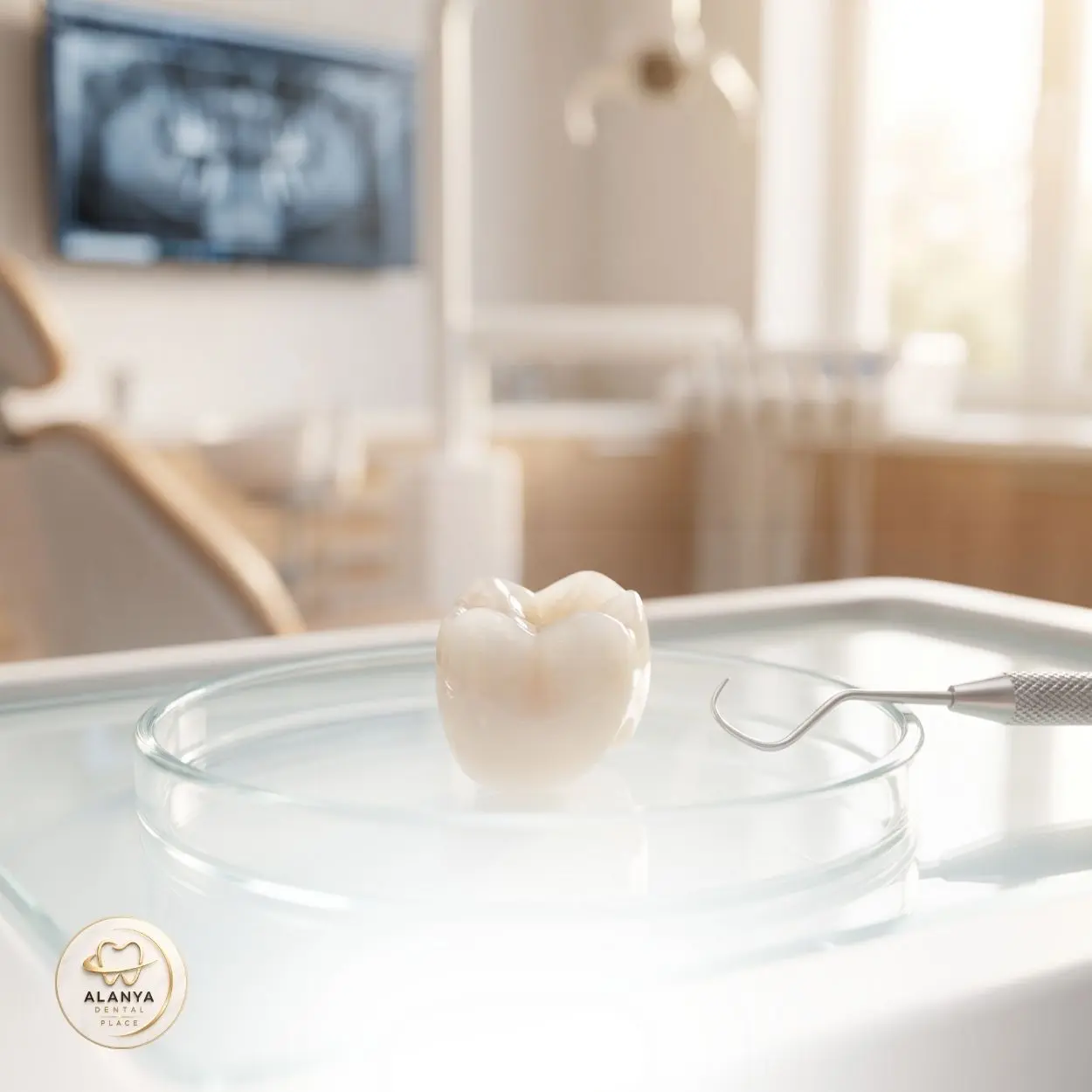
Dental crowns in pictures

Questions about dental crowns
Yes. A crown covers the whole visible part of a tooth. People sometimes call it a ‘cap’. The natural part of a tooth above the root is also called the crown.
A veneer is different. It is a thin shell that covers only the front of the tooth, so less of the tooth is removed. After an examination, your dentist will tell you which suits you, based on how damaged your tooth is.
A simple case can usually be finished within 5 days. Several teeth or a more complex case can take 7 to 8 days. On the first day, the dentist examines and scans your teeth, shapes the tooth and fits a temporary crown. When the laboratory has made your permanent crown, the dentist fits it. Your treatment plan will give the exact time, so please plan your travel around it.
There is no single answer, as it depends on you. Zirconia contains no metal, so it does not cause a grey shadow at the gums. It is also very strong when you chew, so it is often used for both front and back teeth. Porcelain-fused-to-metal (PFM) crowns cost less, but a thin grey line can appear at the gum line over time. Your dentist will suggest a material based on where the tooth is and how you want it to look.
The dentist shapes the tooth and fits the crown under local anaesthetic, so you should not feel pain. You may feel some pressure. When the anaesthetic wears off, it is normal for the tooth to be sensitive for a few days. If the pain is severe or does not go away, contact your dentist.
Crowns usually last 8 to 15 years, depending on the material and how well you clean your teeth. Some materials, such as solid (monolithic) zirconia, may last longer. Regular check-ups, good cleaning and not biting on hard things help a crown last. We cannot say exactly how long your crown will last, as this varies from person to person.
We use zirconia and ceramics from international brands, the same brands that dentists use in other countries. You can ask us which brand will be used for your crowns.
A crown usually needs 2 appointments. At the first, the dentist examines and scans your teeth, shapes the tooth and fits a temporary crown. At the second, the dentist fits the permanent crown and checks that it fits well. If you need more than one crown, or other treatment such as root canal treatment, you may need more appointments. Your dentist will plan this with you.
Yes. Brush it at least twice a day, like your other teeth. Use a soft toothbrush to clean the gum line around the crown, and floss gently. This helps the crown last and keeps your gums healthy. Hard toothbrushes and abrasive toothpastes can damage the surface of the crown over time.
The crown itself cannot decay. But the natural tooth at the edge of the crown can decay if it is not cleaned well. Regular brushing, flossing and a dental check-up at least once a year greatly reduce this risk. If you notice bad breath or swollen gums, see your dentist as soon as you can.
Ask for a treatment plan
Send us a message, and our dentist will get back to you with a treatment plan and the costs.
Looking after your crown
After your crown is fitted, your dentist will show you how to clean around it. If you have any discomfort after treatment, contact your dentist.
If your tooth was sensitive before treatment, it may stay sensitive after the crown is fitted. If hot or cold food and drinks make the tooth sensitive, talk to your dentist.
With crowns that contain metal, a dark line can sometimes show on the tooth. This line is the metal of the crown, so it is normal.
A crown does not protect the tooth from decay or gum disease. So keep cleaning your teeth well after you have a crown. Follow your dentist’s advice on caring for your teeth and gums.
Regular brushing helps keep your teeth healthy and looking good after crown treatment.
What types of crown are there?
Crowns are made from different materials, so you can choose one that suits your teeth. In the past, most crowns were made of metal or gold.
Today, crowns can also be made from whiter materials that look more natural. Common options include:
Porcelain-fused-to-metal crowns
Porcelain-fused-to-zirconia crowns
Empress (glass-ceramic) crowns
Porcelain veneers (for the front of the tooth only)
Each material has different properties and benefits. Porcelain veneers have become more popular in recent years. If you would like to improve how your teeth look, your dentist can help you choose the right option.
Crown materials differ, so how long a crown lasts varies. Daily care and regular check-ups help it last longer without problems.