E-max crowns and veneers in Alanya, Turkey
E-max is a glass-ceramic (lithium disilicate) with no metal in it. It lets light through in a similar way to natural tooth enamel. At our clinic in Alanya, we make E-max crowns and veneers with digital smile design and CAD/CAM.
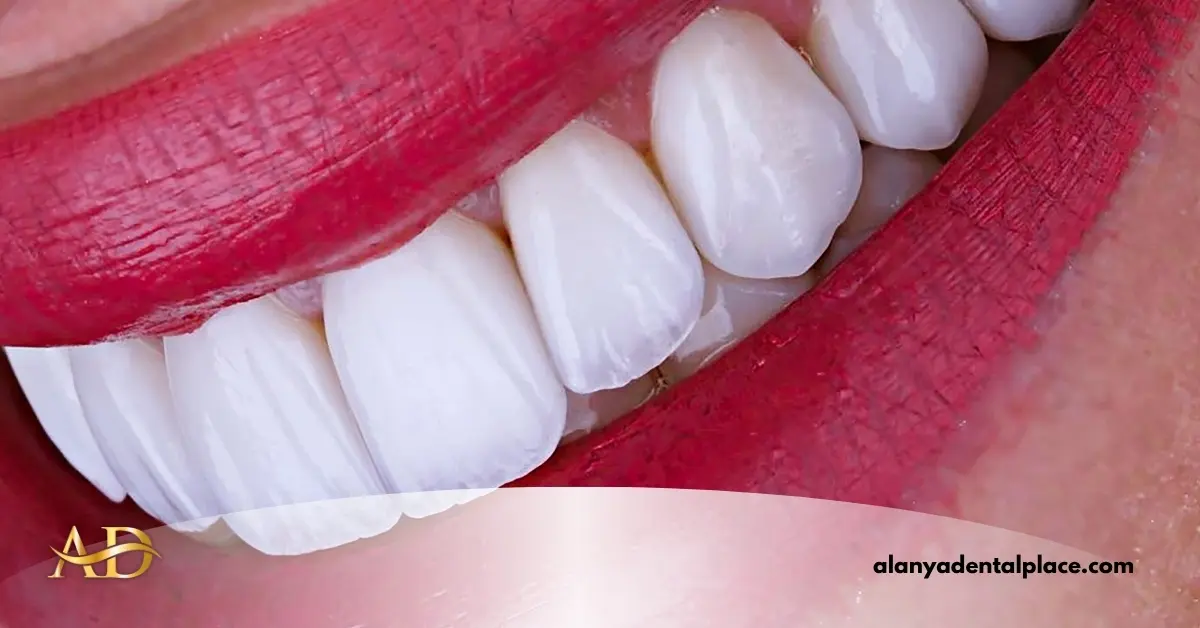
Light transmission No metal A natural look Translucency Stable colour CAD/CAM precision Durability is a key feature of E-max
What is E-max?
E-max (IPS e.max) is a glass-ceramic made from lithium disilicate, with no metal in it. It is used to make crowns and veneers.
What makes E-max different is how it lets light through, in a similar way to natural tooth enamel. Porcelain crowns with a metal base reflect light from the surface, which can look flat and less natural. With E-max, light passes into the material and is reflected in layers, as in a natural tooth. This is why it can look very natural, especially on front teeth.
This comes from the structure of the material. In E-max, lithium disilicate crystals sit in an orderly pattern inside a glass-like base. This gives it both strength and the ability to let light through. It has become a common choice for front teeth.
Is your tooth suitable for E-max?
Contact us to find out whether E-max could suit your teeth.
E-max Press or E-max CAD?
E-max can be made in two different ways.
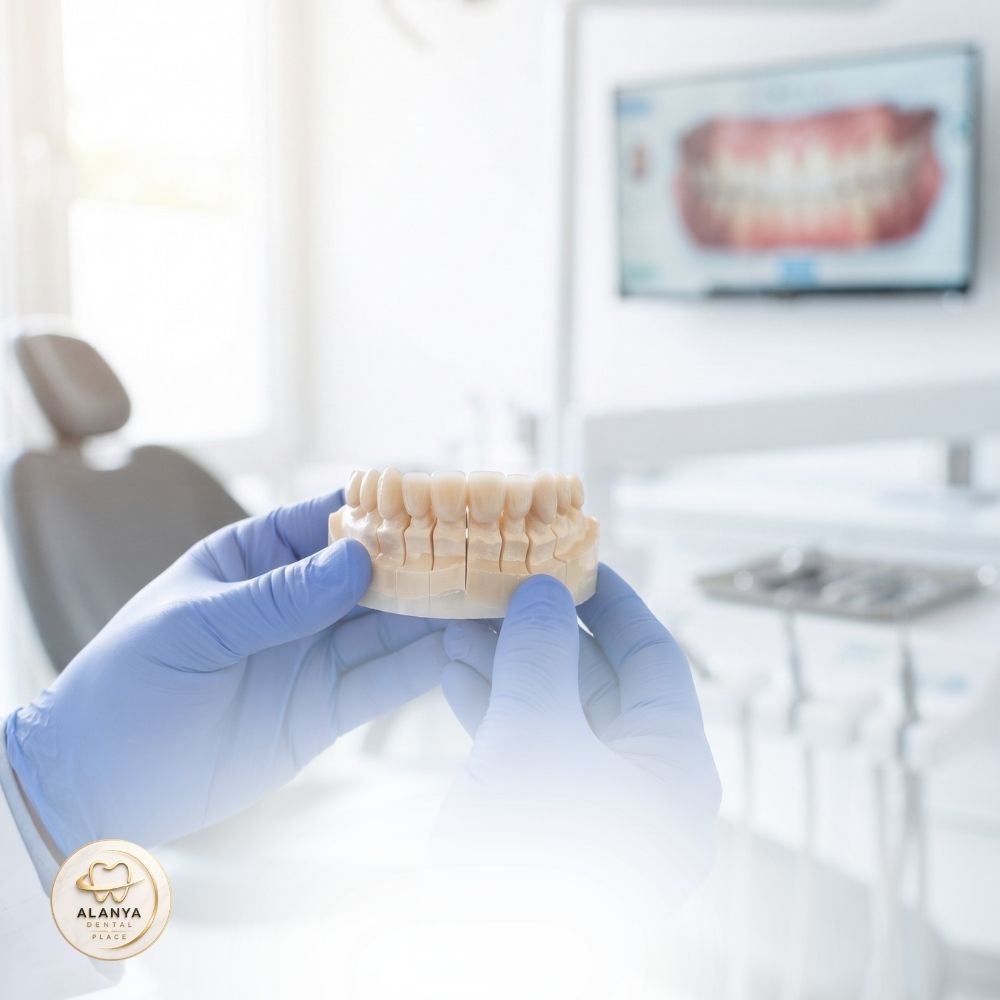
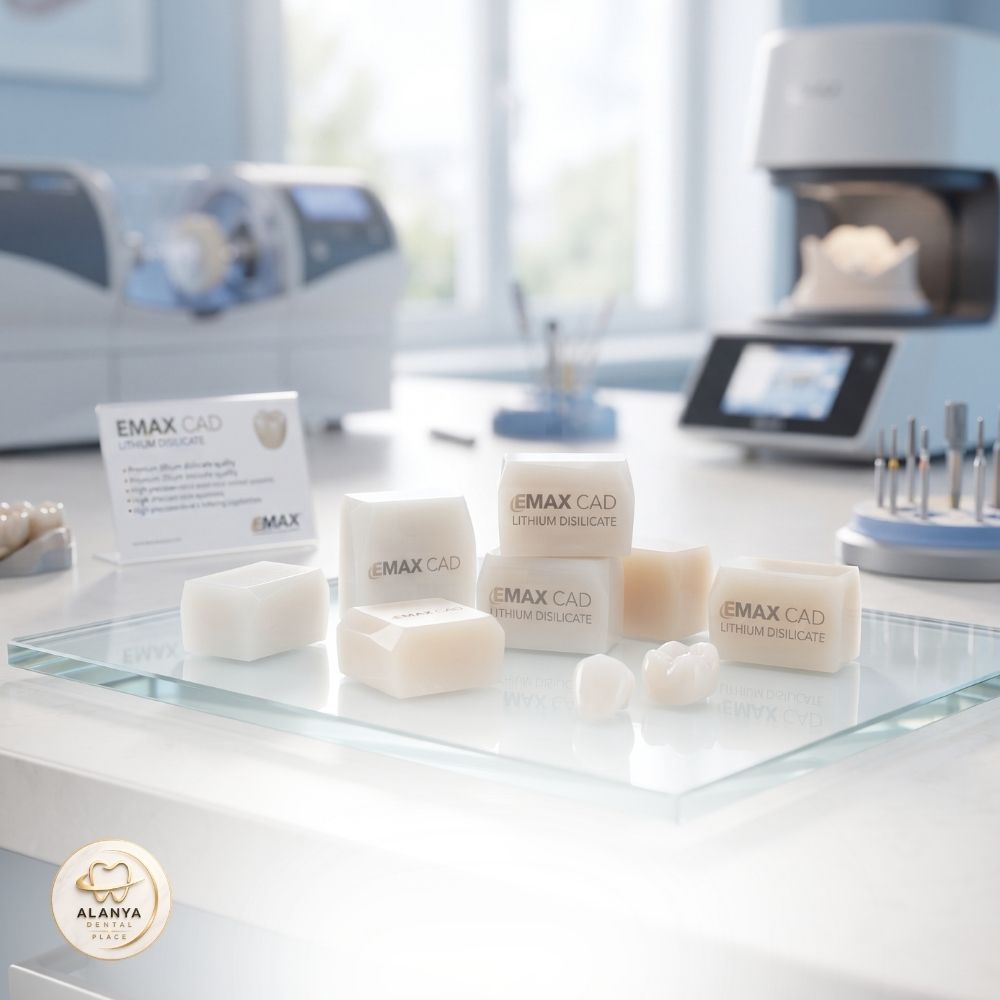
E-max Press is made like traditional casting: heated ceramic is pressed into a mould. E-max CAD is milled by a CAD/CAM machine from a digital scan. During milling, the blocks are light blue and fairly soft (about 160 MPa). Firing them in a furnace then gives them their natural colour and a strength of 400 to 500 MPa.
For bridges, or where extra strength is needed, E-max ZirCAD or ZirPress may be used. These have a zirconia core. Which type suits you depends on where the tooth is and what you want from treatment.
E-max or Empress: what is the difference?
‘E-max’ and ‘Empress’ are often used as if they were the same product. In fact, they are different materials from different generations.
Empress is an older glass-ceramic, strengthened with a mineral called feldspar. It is not as strong as E-max. E-max is based on lithium disilicate, which makes it stronger and lets more light through. Knowing the difference helps you understand what each option offers.
Contents
Who is E-max suitable for?
E-max suits front teeth especially well. This is because it lets light through, and front teeth take less chewing force than back teeth.
Who is E-max not suitable for?
A tooth with large decay, large fillings or root canal treatment may be too weak for thin E-max. A stronger option, such as a zirconia crown, is then usually recommended. If you grind your teeth badly (bruxism), zirconia is generally safer, especially for back teeth. Gum disease and tooth decay must be treated before E-max treatment.
E-max, zirconia, veneers or composite bonding?
These four options are often confused, but each one suits a different need.
E-max lets more light through and can look more natural. Zirconia is stronger and copes better with heavy chewing. So E-max is often chosen for front teeth, and zirconia for back teeth. Our zirconia crowns page explains this in more detail.
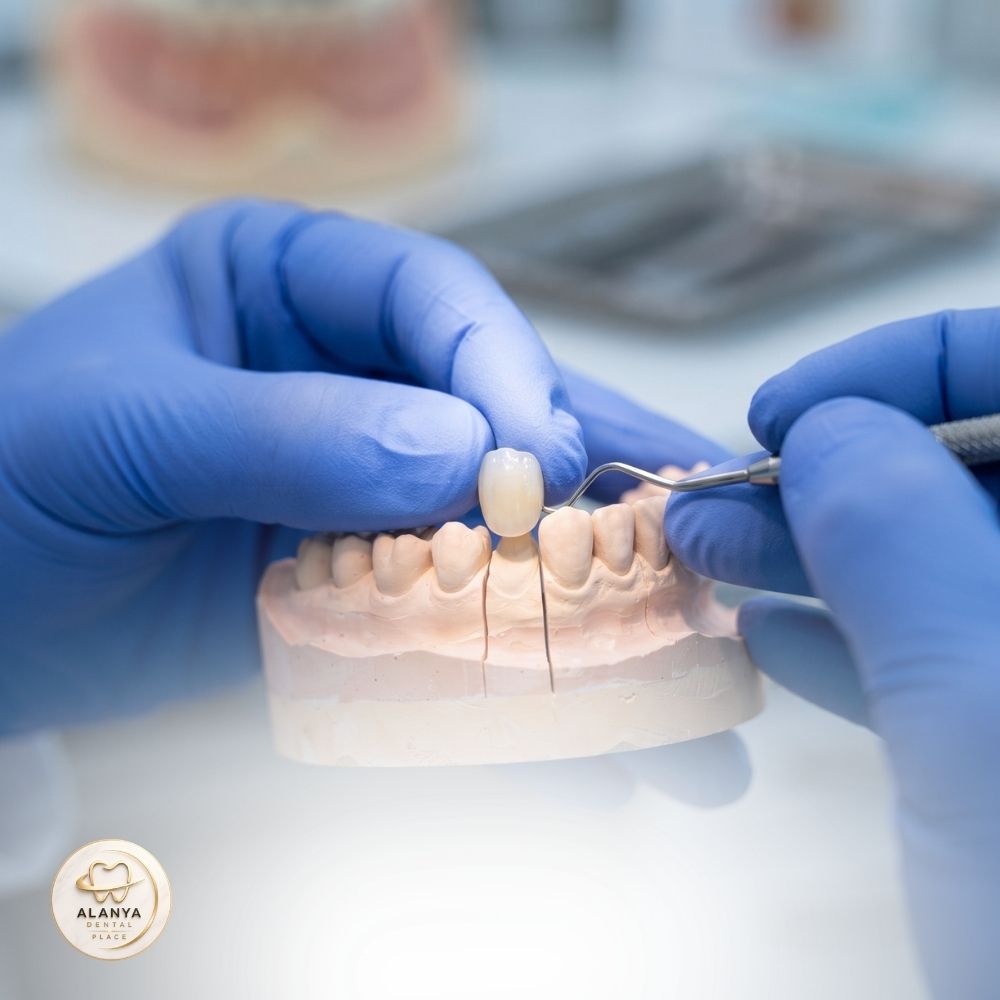
People often ask whether they need an E-max crown or a veneer. Both can be made from E-max; the difference is the thickness and how much tooth is removed. A thin veneer covers only the front of the tooth, so little is removed. A crown covers the whole tooth, so more is removed. Our smile design page explains this for a full smile makeover (‘Hollywood smile’).
Composite bonding removes the least tooth, or none at all. The dentist shapes a tooth-coloured resin directly on the tooth. But composite does not let light through or resist stains as well as E-max. It usually needs replacing within 3 to 5 years.
How is E-max treatment done?
At our clinic in Alanya, E-max treatment follows clear steps, starting with digital smile design.
Consultation and digital smile design
Preparing the tooth
Digital scan or impressions
Temporary tooth
Fitting and bonding
Check-up
At our clinic in Alanya, treatment usually takes 5 to 7 days.
What affects the cost of E-max crowns and veneers?
The cost is usually worked out per tooth.
What makes the cost vary?
The cost depends on the type of E-max (Press or CAD), the number of teeth and their condition. Any treatment needed first, such as gum contouring or whitening, also affects it.
Send us a photo of your teeth for a first assessment.
How long does E-max last?
With good care, E-max crowns and veneers last 10 to 15 years on average. Some last longer.
No crown or veneer lasts forever, and E-max is no exception. With good care, it can work well for many years. E-max has a strength of about 360 to 400 MPa. This is lower than zirconia (900 to 1,200 MPa), but strong enough for everyday chewing.
Yes, it can. But used on the right tooth, at the right thickness and fitted well, E-max is unlikely to break.
It depends on these things:
- Teeth grinding (bruxism): this is the biggest risk. If you grind your teeth at night, the crown or veneer is more likely to crack or break.
- Thickness: if the E-max is too thin, it is weaker.
- How the dentist prepares and bonds it: poor preparation or bonding makes a fracture more likely.
- Habits: chewing ice, cracking nuts with your teeth or opening bottles with them can damage E-max.
- Which tooth it is on: E-max works very well on front teeth. On back teeth with very strong chewing forces, or if you grind your teeth, zirconia may suit better.
As a rough guide:
- E-max usually works well for 10 to 15 years or longer.
- Regular check-ups and cleaning your teeth well help it last longer.
So the question to ask is not “Will it break?” but “Is this the right material for me?”
- If the look of your front teeth matters most, E-max is often a good choice.
- If you grind your teeth badly or bite very hard, monolithic zirconia or another option may suit you better.
E-max itself does not usually turn yellow. But the surface can pick up slight stains over time.
This is why:
- E-max is a glass-ceramic with a very smooth surface. Tea, coffee, red wine and cigarettes stain it much less than natural teeth.
- The colour is part of the material. So, unlike composite fillings, it does not tend to turn yellow.
- If the surface glaze is damaged or wears over the years, stains can stick more easily. A professional polish can usually fix this.
Yellowing and staining are not the same:
- Yellowing: the material itself changes colour. This is not expected with E-max.
- Staining: marks build up on the surface. This can happen if you smoke heavily, drink a lot of coffee or do not clean your teeth well.
To help E-max keep its colour for many years:
- Brush your teeth regularly and use dental floss.
- Cut down on smoking.
- Rinse your mouth with water after drinking tea, coffee or red wine.
- Have your teeth professionally cleaned every 6 to 12 months.
Well made and well polished, E-max can keep most of its natural colour for 10 to 15 years or longer. This is why many people who care about how their teeth look choose it.
Yes, it can. But an E-max crown or veneer that has been prepared and bonded well should not normally come off.
The main reasons it can come loose:
- Not enough surface: with too little tooth surface to bond to, it can come loose over time.
- Bonding problems: E-max is fixed with a special adhesive (resin cement). Mistakes at this stage make it more likely to come loose.
- Tooth decay: if decay starts in the tooth underneath, the bond can weaken.
- Teeth grinding or an injury: strong forces can knock it loose.
- Wear over time: after many years, the bond can weaken, although this is rare.
If an E-max crown or veneer comes loose:
- If it is not broken and the tooth is healthy, it can usually be bonded back on.
- If it is broken, or there is a problem with the tooth underneath, you may need a new one.
With normal use, a well-fitted E-max crown or veneer should not fall out on its own. If it does, there is usually a reason, and a dentist needs to check it.
Does it hurt? Risks of E-max treatment
The tooth is prepared under local anaesthetic, so you should not feel pain during the procedure. Mild sensitivity to hot and cold is normal for the first few days. It usually settles on its own.
Reshaping a tooth cannot be undone. Results vary from person to person, so talk through what you can expect with your dentist before you start.
Caring for your teeth after treatment
After E-max treatment, you can usually go back to your normal activities the same day or the next day. You do not need a long recovery period.
Why do people come to Alanya for E-max?
Many people travel to Turkey for cosmetic dental treatment, including E-max crowns and veneers.
The Antalya region has welcomed patients from abroad for many years. Help with airport transfers and interpreting is easy to arrange. The E-max blocks we use are the same as those used by clinics in other countries.
Our clinic is in Alanya, on the Mediterranean coast. You can spend the days between appointments in the town or by the sea.
E-max treatment at Alanya Dental Place
We focus on clear information and accurate digital planning.
Questions about E-max
Questions about treatment
They are crowns and veneers made from E-max, a glass-ceramic (lithium disilicate). E-max is durable and can look very like a natural tooth. This is why it is often chosen for front teeth.
Main features of E-max:
Natural look: it lets light through much like a natural tooth, so it does not look dull or false.
Close match: its colour, translucency and surface can look very like natural teeth.
Strong: it copes well with everyday chewing. Used in the right cases, it can last for many years.
Stain-resistant: tea, coffee and cigarettes stain it less than natural teeth.
Less tooth removed: in some cases, more of your natural tooth can be kept.
When is E-max used?
To improve how front teeth look
To change the colour of teeth for the long term
To repair broken or cracked teeth
To close gaps between teeth
To rebuild worn or badly shaped teeth
As part of a smile makeover (‘Hollywood smile’)
Who might it not suit?
Your dentist may suggest another material, such as zirconia, if you grind your teeth badly (bruxism). The same applies to some back teeth with very strong chewing forces.
E-max is popular in cosmetic dentistry because it can look natural, is durable and the body generally accepts it well. Your dentist decides on the right material after checking your mouth, your bite and what you want.
E-max crowns and veneers are made in a laboratory from impressions of your teeth. Treatment usually has several stages.
Consultation and treatment plan
The dentist checks your teeth and gums, using X-rays and a digital scan if needed. Then they tell you whether E-max is right for you.
Preparing the tooth
The dentist removes a very thin layer from the tooth’s surface, so the veneer fits well and looks natural. How much enamel is removed varies from person to person.
Digital or traditional impressions
The dentist takes impressions of the prepared teeth with a digital scanner or with impression material. These are sent to the laboratory.
Making the E-max veneers
In the laboratory, the veneer is made from a lithium disilicate block to match your teeth. If needed, the technician adds fine details of colour so it looks natural.
Try-in
The dentist tries the veneer in your mouth and checks the colour, the fit, your bite and how it looks. Small changes can be made if needed.
Permanent bonding
If everything is right, the veneer is bonded to the tooth with a special resin cement. This is one of the most important steps for making it last.
Usually 2 main appointments: one to prepare the teeth and take impressions, and one to bond the crowns or veneers. At our clinic in Alanya, the whole process, including the laboratory work, usually takes 5 to 7 days.
With good care, they last 10 to 15 years on average. Regular brushing, flossing and check-ups every 6 months help them last longer.
No. No crown or veneer lasts forever, and E-max may need repairing or replacing in time. With good care, it can work well for many years.
The tooth is prepared under local anaesthetic, so you should not feel pain during the procedure. Your teeth may be a little sensitive for the first few days. This usually passes quickly.
It can. E-max lets a lot of light through, so it can look very close to natural tooth enamel. This is why it is often chosen for front teeth.
The material itself does not change colour, because E-max is a glass-ceramic. But your natural teeth around it can change colour over time. Over the years, this can cause a slight difference in shade.
E-max is strong, but it can break. Chewing ice, biting a pen or a blow to the mouth can make it crack.
People have different reasons for coming.
Some of the main reasons:
A natural look: E-max lets light through much like a natural tooth, so it can look very natural on front teeth.
Experience: many clinics in Turkey treat a lot of patients from abroad, so they see many cosmetic cases.
Digital dentistry: CAD/CAM systems, digital scanners and modern laboratories help to make crowns and veneers that fit precisely.
A short stay: many clinics plan treatment for visitors from abroad so it is finished in a few days.
Help with travel: airport transfers, hotel bookings and help in several languages make the visit easier to organise.
But one point is important:
What matters most is not the country, but the clinic and the dentist. Results can vary a lot, even within the same city. Genuine materials, the laboratory, tooth preparation and bonding all affect how it looks and how long it lasts.
So, before you have E-max, it is worth asking these questions as well as asking about the cost:
Is genuine IPS e.max material used?
Is the treatment planned digitally?
How much of each tooth will be removed?
What aftercare and follow-up will I have?
These questions help you make a good choice for the long term.
The region has looked after patients from abroad for many years. Travel and help in other languages are easy to arrange. You can also combine your treatment with a holiday.
Our clinic is in Alanya, a town on the Mediterranean coast. You can spend the days between appointments by the sea.
Brush and floss regularly, avoid biting hard objects and have a check-up every 6 months. If you grind your teeth, wear a night guard. This helps your crowns or veneers last longer.
Do you have any other questions?
Sources
The general information on this page is based on these sources. For decisions about your own treatment, please talk to a dentist.
The first step is a photo of your teeth.
Send us a photo of your teeth. A dentist will look at it and explain your options and the costs.
Patients come to our clinic from many countries.